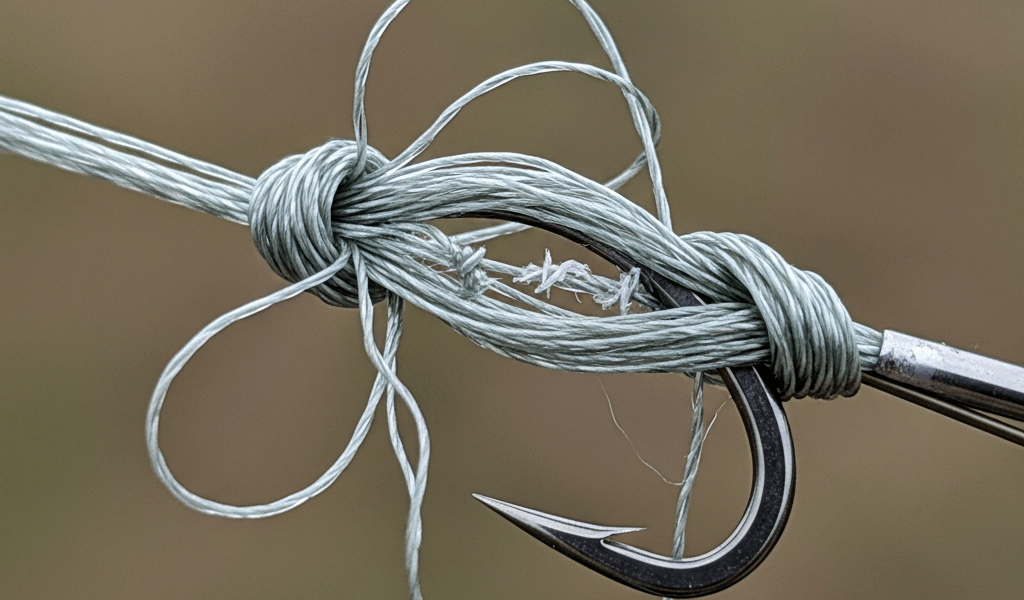
Fishing Knots Have Gotten Complicated With All the Line Advice Flying Around
As someone who spent three full seasons cursing Berkley Trilene and two different brands of fluorocarbon, I learned everything there is to know about why fishing line breaks at the knot. Today, I will share it all with you.
Spoiler: it wasn’t the line. It was never the line.
I was standing chest-deep in the Susquehanna — waders, October cold, a smallmouth that probably went four pounds — when my 20-pound mono snapped like I’d tied it with thread. Clean break. Right at the hook. I’d blamed the bargain-bin spool I’d grabbed at Walmart for $4.97. Took me another two seasons to actually watch a knot fail under tension and realize what was happening. The line almost never fails mid-span. The knot does. Every time. Almost without exception.
So here’s what’s actually going wrong — and how to stop losing fish over it.
Four Reasons Knots Fail and How to Spot Each One
You Cinched Your Knot Dry
This one gets more anglers than anything else. Monofilament and fluorocarbon generate friction heat when you pull the tag end tight — and if the knot is dry, that heat weakens the line fibers right at the connection point. That’s the exact spot taking all your casting load. You’ve essentially pre-burned through part of your line strength before the fish ever touches your lure.
How to tell: The break happened clean and close to the knot. The remaining line feels stiff or looks slightly discolored right where it snapped.
The fix: Wet the knot with saliva before cinching. Two seconds. Do it every time.
You Used the Wrong Knot for Braid
But what is braided line, really? In essence, it’s multiple fibers woven together for strength. But it’s much more than that — it’s also intentionally slick, and that slickness is what destroys an Improved Clinch knot. The line just slides through the wraps under load. I learned this the expensive way. Lost a $38 Megabass Vision 110 to a knot I’d tied a thousand times. Perfectly tied. Perfectly wrong for braid.
How to tell: The knot slipped rather than snapping. You felt a sudden give — not a sharp pop.
The fix: Palomar knot or uni knot for all braid connections. Non-negotiable.
Your Fluorocarbon Didn’t Have Enough Wraps
Fluoro is stiff. Stiffer than mono, stiffer than braid — and that stiffness means it resists bending around itself. You need more turns through the hook eye. At least 6 to 7 wraps instead of the standard 5. Too few, and the line hasn’t made enough contact with itself to distribute the load. It’s concentrated in one spot instead of spread across the connection.
How to tell: The break happened right at the knot, and the remaining line looks slightly bunched or unevenly compressed near the eye.
The fix: Add two extra wraps for fluoro on any terminal tackle. Or switch to the Davy knot entirely — holds stiff fluoro well with fewer turns, and honestly takes about eight seconds to tie once you know it.
Your Hook Eye Was Sharp or Rough
A rough hook eye is a line-killer that works slowly and invisibly. Each cast, each hookset, the sharp edge cuts a little deeper into your line’s coating. By the time a real fish runs, that stress point is already compromised. That’s what makes this failure mode so frustrating to anglers — the knot looks fine, the line looks fine, and then everything fails at once.
How to tell: The line broke right at the eye — possibly with a visible nick or frayed section in that last quarter-inch.
The fix: Run your fingernail across the hook eye before tying. Catches on anything? New hook. Don’t make my mistake of tying on anyway and figuring it’ll probably be fine.
The Right Knot for Each Line Type
Match the knot to the line. Half your problems disappear immediately.
Monofilament takes the Improved Clinch or Palomar equally well. I’m apparently an Improved Clinch person — 20 years of muscle memory — and it works for me while the Palomar never felt natural. But objectively? Palomar is simpler and leaves less room for error if you’re still building the habit. Either works on mono. Pick one and own it.
Braided line demands Palomar or uni. Full stop. The Improved Clinch will slide on braid every single time — it doesn’t matter how carefully you tied it. Palomar is my default because it cinches fast and I can tie it in the dark. Uni knot works too, just takes slightly longer. Neither slips when tied right.
Fluorocarbon does fine with an Improved Clinch if you add those two extra wraps and wet before tightening. But the Davy knot is the real sleeper pick here. Five wraps, fast to tie, holds like a vault on stiff fluoro. Probably should have opened with this section, honestly. Would’ve saved me months of failed connections my first year running fluoro leader.
Before you ever cast — pull the knot hard with both hands. Most knots that are going to fail do it right there, not on the water. If it holds that pull, it’ll hold a fish.
How to Tie a Knot That Actually Holds
- Wet the knot before cinching — saliva, water, doesn’t matter. Eliminates friction heat. Takes two seconds and it’s the single highest-value habit in this entire list.
- Tighten slowly and evenly. Don’t jerk the tag end. Steady pressure lets the line settle into itself without creating stress points at the contact edges.
- Trim the tag end close, not flush. Leave about 1/16 of an inch. Flush cuts can weaken the knot; too much tag end creates drag and catches on guides.
- Check the hook eye before tying. Fingernail test, every time. Rough or sharp? New hook.
- Pull-test before you cast. If the knot moves at all under hand pressure, untie it and start over. A knot that feels loose on land will fail the moment a real fish makes a run.
When the Knot Is Fine and the Line Is Actually the Problem
So, without further ado — sometimes the knot really isn’t the culprit. Line with significant memory — the stuff that sat coiled on a spare spool in your tackle box through an entire summer — gets brittle. Monofilament and fluorocarbon both degrade with UV exposure over a full season. If you’re snapping knots on tackle you know you tied correctly, spool on fresh line first. A new 300-yard spool of Seaguar InvizX 12-pound runs about $18. Cheaper than the lure you’re about to lose.
Cracked rod guides are another quiet killer. The line frays slightly each time it passes through on a cast, and that frayed section breaks at the knot under load. Run your eye down your guides in good light — you’ll see cracks immediately. A replacement guide tip costs about $3 at any tackle shop.
That’s what makes knot failure so endearing to us anglers — there’s always something to chase down. But nine times out of ten, when your fishing line keeps breaking at the knot, the knot is where to look first. Check your tying method, match the right knot to your line type, wet before cinching. The next fish that runs hard will feel the difference.


Stay in the loop
Get the latest fish blog updates delivered to your inbox.