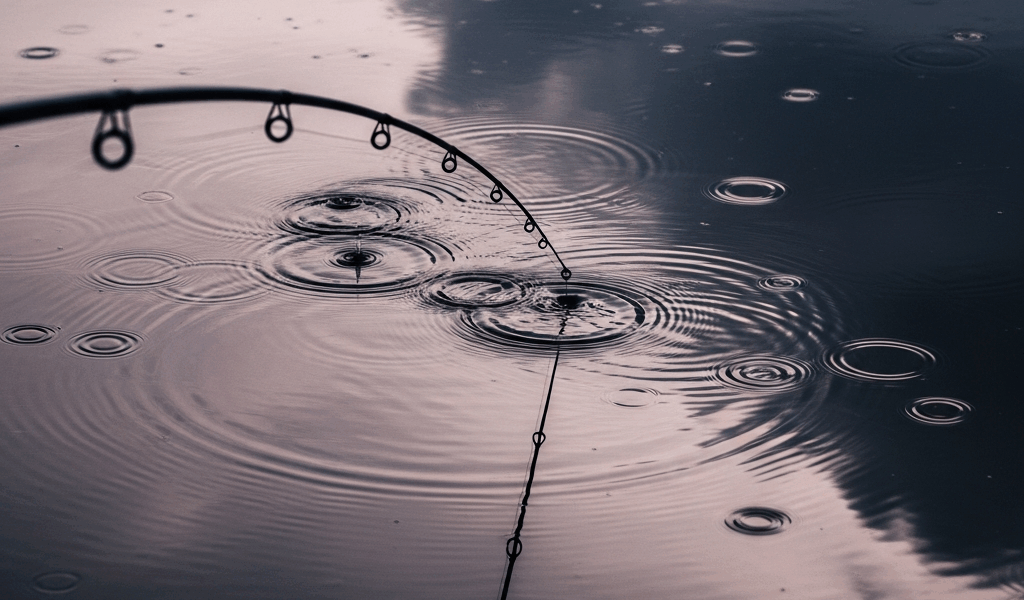
Fishing in the Rain — Does It Actually Help or Hurt
Fishing in the rain has gotten complicated with all the contradictory advice flying around. My old mentor swore fish bite harder when the sky opens up, so for nearly a decade I’d grab my Ugly Stik and head to the pond every time clouds rolled in. Half those trips I came back empty-handed, soaked through, genuinely confused. The turning point came when I finally understood rain isn’t one single condition — it’s maybe four or five completely different situations that each demand a different response. Today, I will share it all with you.
But what is “fishing in the rain,” really? In essence, it’s fishing under altered atmospheric and water conditions triggered by precipitation. But it’s much more than that. It’s about barometric shifts, visibility changes, oxygen levels, and fish behavior swinging wildly based on rain intensity, timing, and species. Most guides just shrug and say “it depends.” That’s useless when you’re standing at the water’s edge at 6 a.m. deciding whether to rig up or drive home.
Why Rain Changes How Fish Behave
Fish don’t feel rain the way we do. They do, however, notice everything that comes with it. Light levels drop at the surface. That matters enormously — fish use light to spot prey, but clear water and bright skies also make them skittish. Lower light gives them confidence. Suddenly a 2-foot flat that was too exposed at noon becomes prime feeding territory.
Rain also stirs up shallow water. Moving water pulls insects, worms, and debris off banks and into the column. For bass especially, that’s a dinner bell. Your presentation doesn’t need to be perfect when fish are already locked into feed mode — they’re hunting, not browsing.
Then there’s clarity. Light rain on a still pond? Barely any change. Heavy rain hammering a creek for 20 minutes? That water goes brown fast. I’ve watched a perfectly clear stream turn the color of coffee in under half an hour during a July downpour. That distinction changes everything about your approach.
Light Rain vs Heavy Rain — Not the Same Situation
This is honestly where most rain fishing advice completely falls apart. Light drizzle and a heavy downpour don’t just feel different — they trigger almost opposite behavior in fish.
Light Rain or Drizzle
Light rain is legitimately good news. You get the reduced glare without the visibility problems. Bass in particular turn aggressive — the overcast sky makes them bold hunters rather than cautious prey. Some of my best topwater mornings happened in light drizzle, throwing 4-inch Zara Spooks along grass edges before 9:30 a.m. The fish were pushing wakes 15 feet before they even hit the lure.
What you should do: go darker on colors — black, dark blue, chocolate brown. Keep baits in the shallows and along vegetation edges. Fish faster than you think you need to. Don’t slow down your retrieve waiting for fish to decide. They’ve already decided. Also target the same spots you’d fish on a heavy overcast day, because light rain essentially gives you that condition plus extra oxygen and food movement. That’s what makes light rain endearing to us bass anglers.
Heavy Rain
Heavy rain is a different animal entirely. Visibility collapses. Four feet of water clarity becomes one foot in twenty minutes flat. Fish that were confident and aggressive now get spooked by runoff noise and pressure changes. A lot of them go deep or just stop moving altogether — especially if the storm hits fast and hard.
What you should do: abandon topwater entirely. Switch to chartreuse, white, or orange — anything that stays visible in murky water. Heavier jigs with chunky trailers outperform finesse setups because fish locate them through vibration and lateral line, not sight. Go deeper. A 15-foot ledge with wood cover beats a 3-foot flat absolutely every single time during heavy rain. Stop fishing where fish should be and start fishing where they actually are.
The Best Window Is Right Before and Right After
Here’s the part nobody talks about enough: the 45 minutes before a storm arrives is often the single best fishing of the entire day.
Barometric pressure drops ahead of incoming storms. Fish feel that. It triggers a feeding push — they sense the pressure shift and respond by loading up before conditions change. I’ve watched largemouth absolutely wreck topwater lures in the 30 minutes before the sky opened up on a Tuesday afternoon in late August. Had I waited for the rain, I’d have missed the whole bite.
During heavy rain itself, expect a slowdown. That’s honest advice. But the first hour after a hard downpour clears? Fish return to edges, clarity recovers faster than you’d expect, and runoff keeps carrying food into the system. Last June I caught five bass in 40 minutes right after a summer storm passed — had barely touched a fish during the downpour itself. That was a 90-minute window of nothing followed by the best session of the month.
Timing breakdown: fish aggressively when you see storm clouds building on the horizon. Once heavy rain starts, give it maybe 15-20 minutes. Still dumping? Take a break in the truck — you’re not catching fish any faster by getting soaked. Watch for clearing skies and get back on the water fast. That post-storm window closes quicker than you think.
Which Species Respond Best to Rain
Not every fish reacts to rain the same way. Not even close.
Bass
Bass are the biggest winners in light rain. Topwater becomes deadly. They’ll crush a Whopper Plopper in conditions where they’d completely ignore it under blue skies. Heavy rain makes them more cautious, but they still feed — you just need to adjust colors and go deeper.
Trout
Stream trout are split depending on intensity. Light rain that bumps water flow and dislodges insects from banks? Fantastic. Heavy rain that turns your creek the color of chocolate milk? Trout shut down — visibility is their whole game. Pond and lake trout behave closer to bass, where light rain helps and heavy rain hurts.
Catfish
Catfish genuinely love post-rain conditions. Rising water and muddy runoff seem to flip a switch for them. They hunt almost entirely by smell, so water clarity doesn’t slow them down the way it kills a sight-feeding bass. If catfish are your target, fish the hour after rain stops. Don’t make my mistake of leaving before that window opens.
Crappie
Crappie are sensitive. Light rain moves them shallow and gets them biting. Heavy rain pushes them deep into brush piles and submerged structure where they basically ignore everything you throw.
What to Change in Your Tackle When It Rains
Small adjustments make a real difference here. Probably should have opened with this section, honestly — it’s the most immediately useful part.
- In light rain: topwater baits, dark colors (black, dark blue, brown), faster retrieves, shallow water and grass edges
- In heavy rain: jigs with bulky trailers, bright colors (chartreuse, white, orange), heavier presentations, deeper structure
- Post-rain: topwater again as clarity returns, natural colors, target shallow edges where fish push back in
One safety note — lightning isn’t negotiable. Thunder within a few miles means you’re off the water. Full stop. Light rain with no lightning, though? Completely fine and often excellent. I’m apparently someone who fishes in a $14 Frogg Toggs rain jacket and it works perfectly for me, while every fancy Gore-Tex option I tried never kept my casting arm dry. Go figure.
While you won’t need a full dry suit, you will need a handful of practical items. A cheap poncho keeps your hands free for casting. Polarized glasses with rubber frames — the $22 Fishoholic ones from Amazon don’t slide off wet — matter more than people admit. Wet hands on a spinning rod grip kill your sensitivity fast.
So, without further ado, here’s the bottom line: fishing in the rain helps when you know which rain you’re dealing with. Light drizzle before 10 a.m.? Get out there immediately. Heavy downpour with blown-out visibility? Fish the hour before it hits or wait for clearing skies. You’re not guessing anymore.

Stay in the loop
Get the latest fish blog updates delivered to your inbox.