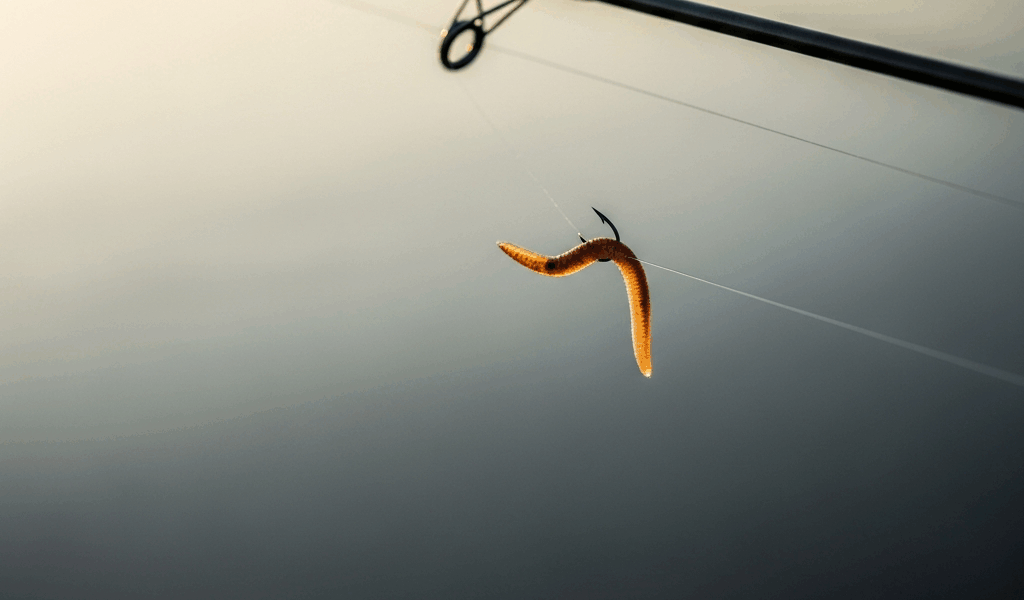
Why Your Worm Keeps Flying Off Mid-Cast (And What’s Actually Going On)
Worm fishing has gotten complicated with all the conflicting advice flying around. As someone who spent years losing bait on nearly every third cast, I learned everything there is to know about why this specific problem happens. Today, I will share it all with you.
Here’s the moment I’m talking about: you accelerate the rod, feel that familiar weight load up — then nothing. The worm cartwheels ten feet to your left while the hook keeps sailing another thirty. That specific failure, mid-cast separation, is almost never what the fishing forums say it is.
Most articles blame the retrieve. Drag, retrieval speed, snags. Fine. But nobody’s talking about the cast itself — that half-second of acceleration where everything falls apart. Probably should have opened with this section, honestly. It’s where the real diagnosis lives.
Three things cause this. Hook size mismatch. Bad rigging position. Casting mechanics too aggressive for lightweight bait. That’s it.
When your hook runs oversized for the worm, centrifugal force wins every time. The worm becomes a small anchor attached to a heavier point — during the power stroke, the inertial difference between hook and worm body just pulls them apart. The worm peels backward. Physics handles the rest without asking your opinion.
Improper rigging creates a pivot point instead of a connection. Thread a worm too shallow — barely catching the head or collar — and it rotates around that weak hook point during acceleration, building torque until it snaps free. That’s what makes this problem so maddening to us bank fishers. It feels random, but it’s completely mechanical.
Soft plastics and live worms also can’t handle the same aggressive whip-speed cast you’d use with a hard crankbait or a three-quarter-ounce jig. The bait can’t match the rod’s deceleration on the other end of the power stroke. Something has to give — and it’s always your worm.
Is Your Hook the Wrong Size for Your Worm?
But what is hook-to-worm mismatch? In essence, it’s using a hook with a gap wider than the worm’s body thickness at the entry point. But it’s much more than that — it’s the single most overlooked reason anglers blame their casting arm when the real culprit is sitting in their tackle box.
I grabbed whatever hook was nearby for years. Size 4/0 on a three-inch finesse worm. A 3/0 on a four-inch Senko — I’m apparently a slow learner and the wrong hook size works against me every time while downsizing never fails. Don’t make my mistake.
Here’s a practical rule: the hook gap should never exceed the worm’s body thickness at the rigging point. For a standard four-inch worm — your average Zoom Trick Worm or similar — a 2/0 hook works cleanly. A 3/0 starts getting sloppy. Anything above that and you’re fighting physics on every single cast.
The tricky part? An oversized hook performs fine once the worm hits the water. Sets properly, holds during the retrieve, handles a fish without drama. The failure is cast-specific, which tricks anglers into blaming technique instead of equipment. The hook isn’t the problem during the fight — it’s the problem during acceleration.
Live worms compound this badly. A full nightcrawler on a 4/0 hook is vulnerable from the moment you start your casting stroke. The worm’s mass is spread along its entire length while the hook is a dense, concentrated point. During the power stroke, the worm simply can’t keep up. It peels right off the shank.
Go smaller. A 1/0 or 2/0 feels undersized until you realize you haven’t lost bait in forty-five minutes.
How to Rig a Worm So It Actually Stays On
Rigging determines everything. Positioning, depth, anchor strength — all of it matters.
For a Texas rig with soft plastics, thread the hook through the worm’s head at least a quarter-inch deep — not a shallow nick, a real commitment. Then bring the point back and re-embed it in the body about half an inch down. Two anchor points. That’s the goal. Mid-cast separation becomes nearly impossible because the worm is threaded through, not just pierced at a single spot.
For live worms, find the collar — that slightly thicker band just behind the head, sometimes called the saddle. Thread the hook straight through it once. Single solid anchor point. Multiple piercings feel more secure but actually create more weak spots and more rotation potential. One clean pass through the collar holds better than three scattered punctures.
Wacky rig anglers should use an O-ring — a small rubber band, usually around $3.99 for a pack of fifty at most tackle shops. The ring sits around the worm’s midsection and the hook passes through the ring, not directly into the worm body. That geometry distributes casting stress across a broader area. The worm can’t spin around a single pierce point. This one change reduces mid-cast separation dramatically for finesse presentations.
Thread deep on the Texas rig. Bury the hook point. Make the connection feel immovable before you even pick up the rod.
Slow Down Your Cast — Seriously, Slow It Down
Casting mechanics are where most anglers miss the actual fix entirely. While you won’t need to overhaul your entire technique, you will need a handful of adjustments specifically for lightweight bait.
First, you should try a sidearm cast — at least if you’re throwing soft plastics or live worms in open water. Sidearm motion moves your arm through a flatter arc. The rod’s acceleration spreads over more distance. The worm experiences less sudden, concentrated force. The difference is immediate and obvious.
A smooth overhead cast might be the best option, as worm fishing requires gradual loading rather than explosive snap. That is because the power stroke’s final inch — where wrist snap peaks — is exactly where rod velocity maxes out and bait separates. Ease off that snap. Let the rod load naturally and release without the whip at the end.
Think of it like accelerating a car on ice. Steady pressure. No sudden jerks. The rod should feel like it’s building smoothly, not cracking like a bullwhip. That whip-crack might feel satisfying, but a three-inch worm weighing maybe four grams has no chance against it.
Quick Fixes to Try Before You Overhaul Everything
So, without further ado, let’s dive into four immediate solutions you can test on your next trip out.
- Downsize your hook. Go one size smaller than feels right. A 1/0 instead of 2/0. Fish it for an hour and count how many casts you lose bait on. You’ll have your answer quickly.
- Add a bait keeper spring. These small coiled springs slide onto the hook shank just above the point — usually sold in packs of ten for under $2.00 at Bass Pro or similar shops. They grip the worm body and prevent rotation during the cast. Simple fix, low cost, works immediately.
- Use worm glue or a toothpick. A small dab of Berkley Bait Fuel or similar worm glue at the hook entry point locks the connection. Toothpick method also works — wedge a piece of toothpick through the worm and hook shank to physically prevent separation.
- Switch to a weedless hook setup. A weedless design buries the point into the worm body naturally as part of the rig — that embedded geometry prevents mid-cast separation almost by default.
Pick one fix. Test it seriously. Your next cast might finally stay together all the way to the water — which, after enough wasted trips, honestly feels like a minor miracle.



Stay in the loop
Get the latest fish blog updates delivered to your inbox.