Why Bass Ignore Everything Else But Will Hit a Ned Rig
Bass fishing has gotten complicated with all the new gear, new techniques, and conflicting advice flying around. As someone who has stood on the bow of a boat in dead-calm, post-front misery watching bass ignore literally everything in my tackle bag, I learned everything there is to know about the Ned rig the hard way. Today, I will share it all with you.
You’ve thrown everything at them. Crankbaits. Spinnerbaits. Soft plastics on Texas rigs. Nothing. The lake’s flat, the sun is brutal, and it’s been three days since a cold front rolled through. That’s when a Ned rig stops being a “nice to have” and becomes the only sensible option on the water.
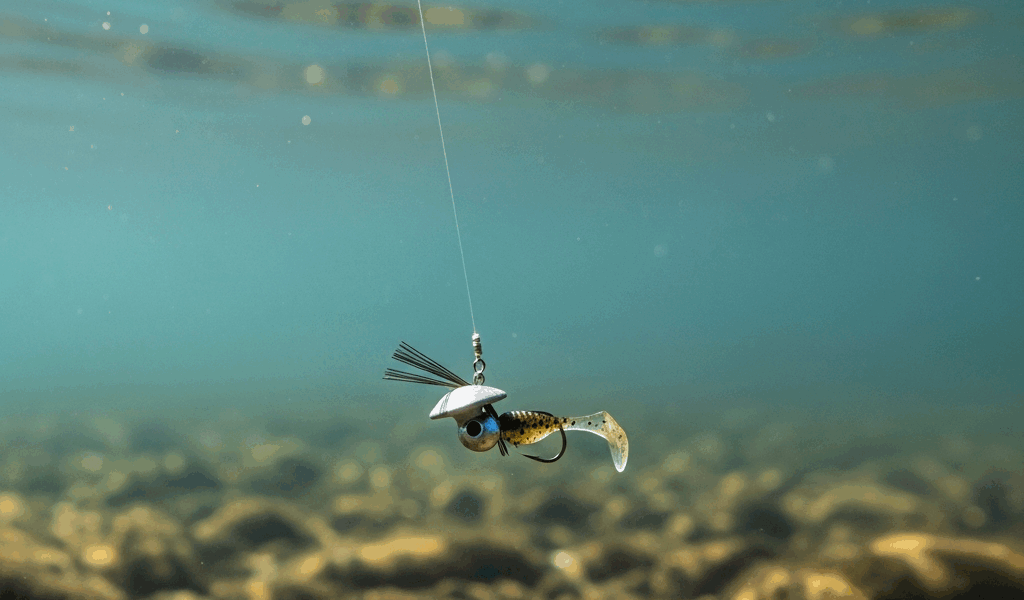
But what is a Ned rig? In essence, it’s a small mushroom-head jig — usually 1/16 to 1/4-ounce — paired with a short soft stick bait that stands up off the bottom and barely moves. But it’s much more than that. It’s a philosophy. It does the opposite of what most bass anglers throw. Small profile. Slow fall. A presence on the bottom that looks like it belongs there instead of screaming panic at every suspended bass within thirty feet.
When bass lock down after a weather shift, or in crystal-clear water, or under heavy fishing pressure, they’re not hunting anymore. They’re just sitting. A bait that darts around triggers suspicion. A bait that barely twitches and looks like a free meal? That gets eaten — almost out of reflex. That’s what makes the Ned rig endearing to us finesse anglers. So, without further ado, let’s dive in.
The Right Setup So You Don’t Kill the Presentation
Everything matters here. One wrong choice and you’ve quietly defeated the entire purpose before your first cast.
Start with line. Fluorocarbon, 6- to 8-pound test. I know that feels uncomfortably light — especially coming off 12-pound braid on a Texas rig. It’s not a problem. Fluorocarbon sinks, it disappears in clear water, and it transmits subtle bites in a way monofilament simply can’t. I spent two full seasons fishing 10-pound and wondering why I kept missing fish on the hookset. Dropped to 8-pound Seaguar InvizX and suddenly felt everything. Don’t make my mistake.
Your rod matters more than most people will admit. A spinning rod — specifically a 6’6″ to 7-foot medium-light with a soft tip — handles 1/16 to 1/4-ounce jigs without turning the whole experience into a disaster. The soft tip isn’t about casting distance. It telegraphs bites that don’t feel like bites. A stiff rod will cost you three fish for every one you land. I’m apparently a budget gear person and a Fenwick Eagle medium-light paired with a Shimano Sienna FE 2500 works for me while heavier, stiffer combos never do on finesse presentations. That combo runs under $150 total. Not glamorous. Absolutely effective.
Jig weight depends on conditions. Start with 1/16-ounce in cold, clear water when bass are completely neutral. Move to 1/8-ounce in slightly stained water or moderate post-front situations. Save 1/4-ounce for wind or deeper structure beyond fifteen feet. Lighter is almost always better when fish aren’t biting — it keeps the bait in the strike zone longer instead of rocketing past it.
How to Work a Ned Rig When Bass Are Being Difficult
The retrieve is everything. Get this wrong and you’re just dragging plastic around paying launch fees for nothing.
Cast two or three feet past your target — a rock pile, a dock post, a subtle point. Let the rig sink on semi-slack line. Don’t watch for a thump. Just count. One-Mississippi, two-Mississippi. Maybe three if you’re deeper than ten feet. Let it settle. Then drag it forward about six inches. Pause. Wait a full three seconds. You will feel ridiculous. Good. That means you’re doing it right.
Drag. Pause. Drag. Pause. Think wounded minnow that has genuinely given up — not fleeing, not darting, just barely alive and available. Most people move it again too fast after the first pause. That’s the exact moment bass would have eaten it.
What a Bite Actually Feels Like
A Ned rig bite is not a thump. Probably should have opened with this section, honestly. It’s usually just weight — a slightly heavier resistance than what you felt a half-second ago. Sometimes it feels mushy. Sometimes you just miss the fish entirely because nothing registered as a “bite.” After the first dozen sessions, your hands learn the difference between “jig dragging across gravel” and “fish inhaling jig.” Until then, set the hook on anything that feels even slightly wrong.
Quick wrist set. Not a rod-smashing, shoulder-wrenching yank. The hook is a size 1 or 1/0, the line is 8-pound, and violence accomplishes nothing here except pulled hooks and lost fish.
Where to Throw It When Fish Are Shut Down
Location changes everything about Ned rig success. Most anglers instinctively go thicker when fishing gets tough — laydowns, brush piles, matted weeds. That’s the trap. Neutral bass don’t want to commit to heavy cover. They want open areas with escape routes nearby.
Main lake points are your first stop. Target the initial drop-off just off spawning flats, especially in spring and fall when cold fronts routinely destroy post-spawn feeding windows. Rocky bottoms outperform sandy flats — rocks hold crawfish and create micro-structure that triggers instinctive, almost involuntary feeding even from locked-down fish.
Docks in bright midday sun are criminally underrated Ned rig spots. Bass push into shade, and they’ll eat small, slow baits there when they won’t chase anything in open water. I’ve caught more cold-front bass under boat docks in February — specifically those wooden dock sections over four feet of water — than anywhere else on the lakes I fish regularly.
Sand bars and subtle depth transitions — a flat that drops just one or two feet — can be absolutely lethal when everything else goes quiet. These aren’t dramatic structures. No visual appeal, nothing to brag about on a fishing map. Most anglers blow past them. That’s exactly why the bass are sitting there unbothered.
Signs You’re Doing It Wrong and How to Fix It
You’re moving too fast. Slow down until you feel genuinely anxious about how slow you’re going. Then slow down more.
Your line is too heavy. 10-pound fluorocarbon feels responsible. It kills sensitivity and increases visibility in clear water. Drop to 8-pound. If you’re breaking off fish, your drag is set wrong — not your line choice.
Wrong hook size. A size 1 or 1/0 wire hook pairs cleanly with a 2.5-inch Z-Man TRD or similar stick bait. A 3/0 or 4/0 makes the bait cant sideways and swim unnaturally. Proportional matters.
You’re fishing it like a Texas rig and expecting identical results. A Ned rig isn’t built for covering water. It’s built for extracting bites from very specific, small areas. Spend five focused minutes on one rock pile instead of one distracted minute on five of them.
When nothing works, the Ned rig does. That’s not magic — it’s just precision matched to conditions. Master this setup and you’ll be catching fish while everyone else at the boat launch is standing around complaining about a dead bite.


Stay in the loop
Get the latest fish blog updates delivered to your inbox.