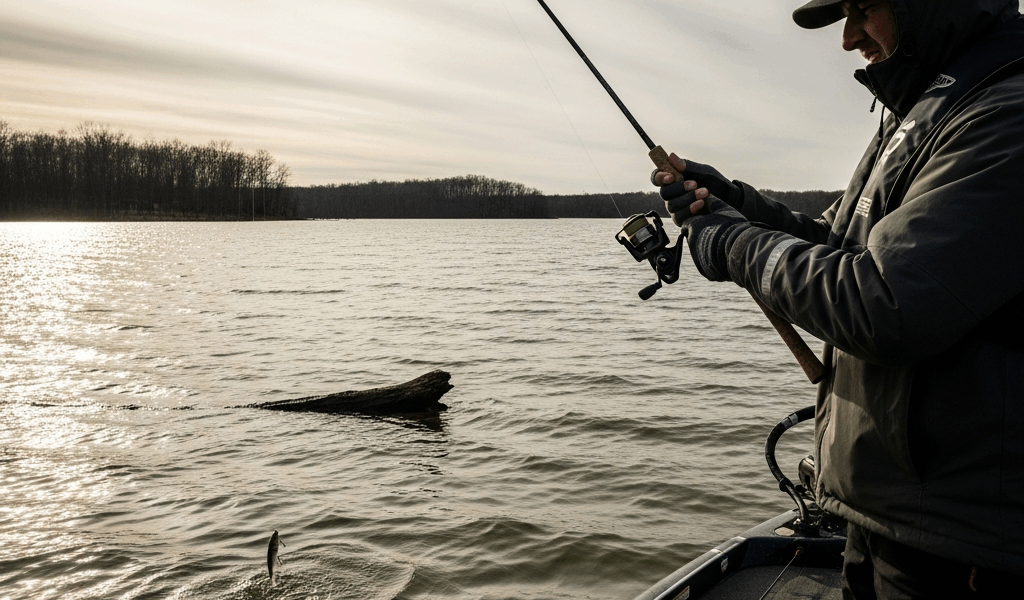
Bass Fishing After a Cold Front — Why It Gets Harder and What to Change
Bass fishing after a cold front has gotten complicated with all the conflicting advice flying around. Slow down, speed up, go deep, stay shallow — everyone’s got a theory. As someone who’s been chasing largemouth and smallmouth for going on twenty years, I’ve learned everything there is to know about what a passing front actually does to these fish. And the hard truth? Most anglers — myself included, plenty of times — just don’t adjust. You drive two hours to the lake, launch at first light, throw everything in the box, and by noon you’ve got one short fish to show for it. The front moved through overnight. That’s on you.
This guide is about adjusting. Not in vague terms — in specific ones. What depths to target, which exact lures to tie on, how slow to work them, and honestly, whether you should’ve even gone out that day at all.
What a Cold Front Does to Bass Behavior
But what does a cold front actually do to bass? In essence, it shocks their system. But it’s much more than that.
Surface water temperature drops anywhere from 5 to 10 degrees Fahrenheit within 24 to 48 hours after a front pushes through. Doesn’t sound dramatic until you remember — bass are cold-blooded. Their metabolism is almost entirely driven by water temperature. Drop it fast enough, and their feeding instinct essentially goes into standby mode. Full stop.
The strike zone shrinks. Dramatically. We’re talking about fish that, during a pre-front feeding frenzy, will chase a swimbait six feet and absolutely crush it. That same fish, post-front? It might sit on the bottom of a brush pile and refuse to move four inches for something landing right on top of it. That is not an exaggeration.
Barometric pressure is part of this too — the sharp rise after a system passes correlates with sluggish bass behavior in almost every body of water I’ve fished. Highland reservoirs in Tennessee. Natural glacial lakes in Wisconsin. Doesn’t matter. The fish aren’t gone. They’re just deeply unmotivated.
Bright skies make everything worse. Bass that were sitting in 2 feet of water along a grass edge the day before are now uncomfortable in that exposed, high-visibility environment. They move. They go deeper, or they tuck tighter into cover — both of which require you to scrap your entire approach and start over.
Depth Adjustment — Where Bass Go After the Front
Probably should have opened with this section, honestly. None of the lure advice matters if you’re fishing the wrong water column.
Shallow fish — the ones you were catching off the bank, around dock edges, over grass flats — they relocate to the nearest available deep structure after a front. They don’t travel far, but they go vertical. A fish sitting in 3 feet of water near a dock slides down a piling and holds at 10 to 14 feet. A bass cruising a grass flat drops off the edge into the adjacent channel and parks on a ledge. Every time.
Here’s where to look:
- Dock pilings with depth — Not every dock has fishable water under it. Find docks extending over 8 to 15 feet. The fish stack on the shaded, deep end of those structures and they barely move.
- Submerged brush piles — If you’ve been building or marking brush piles in 12 to 20 feet of water, this is when they pay off. Post-front bass love tight, defined cover in deeper water. That’s just what they do.
- Channel ledges and drop-offs — The transition from a flat into a creek channel or river channel is a post-front highway. Bass hold right on the break, usually on the deep side.
- Rocky points sloping into deep water — Points that taper gradually from 2 feet down to 20 feet give bass a comfortable migration path. They slide down the slope and sit where the light doesn’t reach as directly.
On a lake I fish regularly in central Kentucky, there’s a submerged road bed running from about 8 feet down to 22 feet along an old creek channel. Normal days, I’ll catch fish scattered all over that structure. After a front? Every single bass I find is stacked between 14 and 18 feet, right on the deepest bend of that road. Every time, without fail. That kind of predictability — it’s honestly one of the few things that works in your favor under cold front conditions.
Slow Down Everything
Frustrated by watching my electronics show bass after bass that wouldn’t touch anything moving at normal pace, I eventually committed to slowing down in a way that felt almost uncomfortable. A drop-shot sitting on the bottom for 45 seconds before I even twitch it. That’s the pace we’re discussing.
Cut your trolling motor speed in half. Seriously — program it down. I run a Minn Kota Ultrex, and where I’d normally fish at speed 7 or 8, I’m at 3 or 4 after a front. Sometimes less. You want to keep a bait in the strike zone as long as possible, because that strike zone is about the size of a dinner plate.
Downsize your lures. This is where a lot of anglers dig their heels in. Don’t make my mistake — I resisted this for years. If you’ve been throwing a 4-inch Senko, go to a 3-inch. Running a 3/8-oz jig? Drop to 3/16-oz. Smaller profile, less water displacement, less aggressive action. The lure should look like it barely has the energy to be alive. That’s what triggers cold-front bass.
Here’s a practical example. Late October, clear highland reservoir, two days after a front moved through. Water temp had dropped from 68°F to 59°F — I still remember looking at my graph and just sighing. I kept throwing a 1/2-oz football jig because it had been absolutely crushing fish the week before. Six hours. Two bites. Finally switched to a 3/16-oz shaky head with a 4-inch straight-tail worm. Next two hours — seven fish. Same depth, same structure. Just slowed down and downsized.
Work every piece of cover thoroughly too. Don’t make one cast to a brush pile and move on. Make five or six, approaching from different angles, letting the bait sit longer than feels natural. Post-front bass often need to see the bait several times before they finally commit to eating it.
Best Lures for Post-Cold-Front Bass
Let’s get specific — “finesse lures” isn’t a useful answer when you’re standing in the tackle shop trying to figure out what to buy.
The Ned Rig
This is my first tie-on after any significant cold front. A Z-Man TRD — the Tiny Ribbon Darter, 2.75-inch — on a 1/10-oz or 3/16-oz Ned head. The mushroom jig head sits the bait upright on the bottom, giving it a natural posture that looks completely non-threatening. Colors I trust: green pumpkin in clear water, black and blue in stained water, and natural craw — Z-Man calls it “Hella Crawdad” — when bass are keyed on crustaceans. Work it with micro-hops and long pauses. Think of it like barely waking the thing up.
Drop Shot — 4-Inch Worm
A drop shot rig with a 4-inch finesse worm might be the best option, as post-front fishing requires absolute subtlety. That is because the fish are sitting tight to structure and simply won’t chase. My go-to is the Roboworm Straight Tail Worm, 4-inch, specifically in “Aaron’s Magic” — translucent green pumpkin with red flake. Size 1 Gamakatsu drop shot hook, 18-inch leader down to a 3/8-oz tungsten weight. The extra leader length keeps the bait up off bottom, in the face of fish that are hugging structure but not necessarily pinned to the actual floor. Shake it barely. Let it sit. Repeat. That’s the whole technique.
Small Jig with Crawdad Trailer
A 3/16-oz or 1/4-oz finesse jig — black/blue or green pumpkin — tipped with a small crawdad-style trailer is deadly around brush piles and dock pilings. I use the Missile Baits 48 Jig paired with a Strike King Rage Bug in “black blue fleck.” Here’s the thing though: trim the trailer’s legs and claws shorter than stock. You want less action, not more. Pitch it to the base of cover, let it fall on a semi-slack line, and watch your line where it enters the water. Most bites come on the fall — they feel like nothing more than the line going slightly slack or drifting sideways.
Line and Leader Considerations
Drop down in line size. Cold, clear, high-pressure post-front water makes bass line-shy — apparently more than most people realize. I switch from 12-pound fluorocarbon to 8-pound Seaguar Invizx on my spinning setups. On the drop shot specifically, I’ll run a 6-pound leader off a 10-pound main line. In clear water fisheries, this makes a real, measurable difference.
Wait 2–3 Days for the Bite to Recover
Here’s the honest truth nobody wants to hear: Day 1 after a cold front is the single worst day you can choose to fish for bass. The fish are uncomfortable, disoriented, and actively uninterested in feeding. If you have any flexibility in your schedule — don’t go. Just don’t.
Day 2 is better but still tough. The fish are settled into their new positions and depth ranges, but they’re lethargic. If you go on Day 2, use everything in this article. Fish slowly, fish deep, fish finesse. Expect to work hard for every single bite.
Day 2 is also when your patience gets tested — really tested. I once fished a Day 2 situation on Kentucky Lake for eight hours and caught four bass. All four on the Ned rig, all in 14 to 16 feet of water on main lake brush. Not a great day by the numbers. But those four fish were exactly where they were supposed to be, doing exactly what post-front bass do. Honestly felt like I understood something by the end of that trip that I hadn’t before.
Day 3 is when things start shifting back. Pressure stabilizes, skies return to partly cloudy, and bass begin moving shallower with noticeably more aggression. By Day 3, you can start expanding your search back toward shallower structure — secondary points, the upper ends of docks, grass bed edges. If the next system is still a few days out, Day 3 post-front fishing can actually be excellent. Bass make up for lost feeding time in a hurry.
One pattern I’ve noticed repeatedly on Day 3: the first two hours after sunrise, while the water is still coolest from overnight, the fish stay deep and slow. But once the sun clears the treeline and starts warming the surface even slightly, bass in the 6 to 10-foot range get active again. That two-hour morning window on Day 3 — fishing a swimbait or jerkbait in the 6 to 8-foot range — has produced some of the best fish I’ve caught in post-front conditions. That’s what makes the cold front recovery period endearing to us obsessive bass anglers. That Day 3 window feels like a reward for patience.
Time your trips around the front, match your depth and lure selection to where the fish actually are, slow down more than feels natural, and go smaller than you think you need to. That’s the whole answer, honestly. Bass fishing after a cold front rewards patience and punishes stubbornness — a lesson I’ve had to relearn more times than I’d like to admit.


Stay in the loop
Get the latest fish blog updates delivered to your inbox.