Best Catfish Bait — Stink Bait vs Cut Bait vs Chicken Liver
Catfish bait has gotten complicated with all the sponsored content and tackle shop opinions flying around. As someone who has fished the same river holes on the same summer nights with all three baits in the same cooler, I learned everything there is to know about what actually works — and what just smells like it should. Today, I will share it all with you.
I’ve pulled channel cats on stink bait at 2 a.m. in July when the water felt like a bathtub. Dragged 30-pound blues off current seams using fresh-cut shad. Lost more chicken livers to bad casts than I want to count. Each bait earns its place. The mistake — the one I made for years — is treating them like they’re swappable.
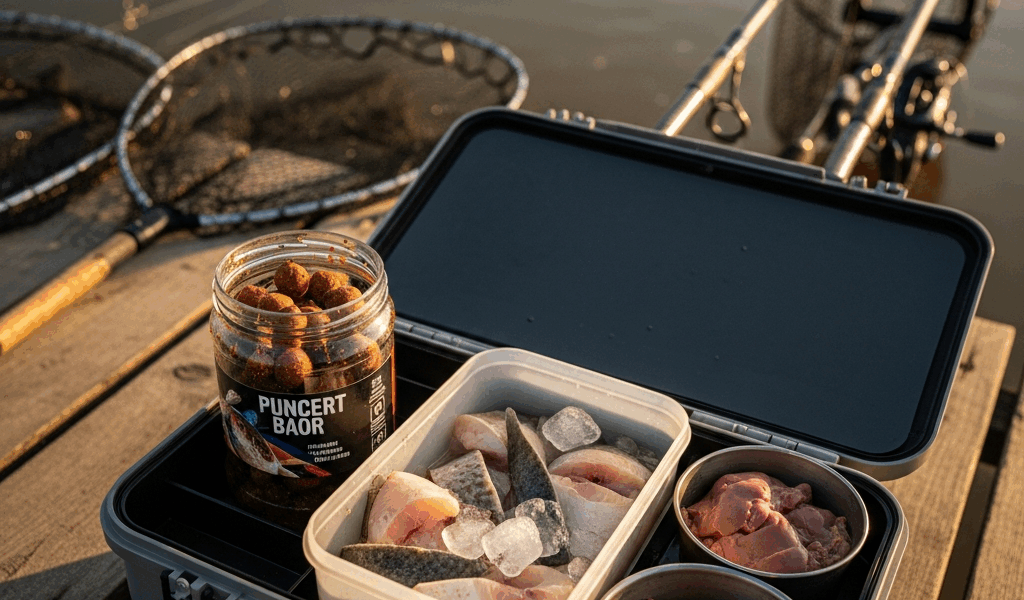
The Three Kings of Catfish Bait — Quick Comparison
But what is the “best” catfish bait? In essence, it’s whichever one matches your water, your target species, and the temperature outside. But it’s much more than that. So, without further ado, let’s dive in — starting with the side-by-side breakdown catfishermen actually argue about at the boat ramp.
| Bait | Effectiveness | Convenience | Cost | Mess Factor | Best Conditions |
|---|---|---|---|---|---|
| Cut Bait | High — especially for large fish | Moderate — requires prep | Low–Medium ($4–$8/lb for shad) | Moderate — fishy hands | Moving water, rivers, tailwaters |
| Stink Bait | High for channel cats in warm water | High — ready to use | Low ($5–$9 per container) | High — smell lingers for days | Warm water, lakes, slow rivers |
| Chicken Liver | Medium — consistent but not elite | High — sold at every grocery store | Very Low ($1.50–$2.50/lb) | Moderate — messy but manageable | Ponds, lakes, slow slack water |
Cut Bait — Best for Big Channel and Blue Catfish
Frustrated by two straight seasons of nothing but eating-size fish, I switched to fresh-cut shad for every river trip I made — and the size of my catches shifted noticeably by August of that first season. Cut bait is exactly what it sounds like. A chunk or strip of baitfish, usually shad, skipjack herring, or carp, cut into sections and fished on a circle hook. The blood and natural oils bleed out slowly, trailing downstream through the current. Big catfish are lazy. They park in the current and let food come to them — a fresh-cut piece of skipjack smells like an actual meal, not a manufactured trick.
Fresh is the word that matters most here. I made the rookie mistake of buying frozen shad from a bait shop, letting it thaw in a warm cooler for four hours, then wondering why nothing was hitting. Rotten and fresh are not the same thing. Fresh-cut bait is firm, bleeds freely, and holds on a 5/0 Gamakatsu circle hook without disintegrating on the cast. Old, soft bait just slides off and sits on the bottom doing absolutely nothing useful.
Cut bait shines in moving water. Tailraces below dams are the clearest example — current is constant, the water is oxygenated, and big blues and channel cats stack up looking for easy calories. My best nights have been on the Cumberland River in Tennessee, throwing 3-inch chunks of fresh shad on a 1-ounce slip sinker rig, letting the bait settle into the eddy just off the main current seam. That was a $6 bag of shad from a live bait shop outside Carthage. Worth every cent.
- Use a sharp fillet knife — ragged cuts bleed better than clean slices
- Cut sections 2–4 inches depending on target size
- Keep bait on ice until the second it hits the hook
- Circle hooks in the 5/0–7/0 range hold cut bait best
Stink Bait — Best for Numbers of Eating-Size Channels
Probably should have opened with this section, honestly. Stink bait is what most people picture when someone says catfishing. It’s also what I dismissed for years — convinced it was a gimmick for people who didn’t know better. I was wrong. Magic Bait Hog Wild Chicken Blood Dip Bait, Uncle Josh Catfish Dip Bait, Sonny’s Super Sticky — these prepared baits are legitimately effective when conditions line up. And those conditions come down to one variable more than anything else. Water temperature.
Above 65°F, channel catfish feed aggressively and lean hard on their sense of smell. Stink bait works directly with that biology. The fermented scent disperses through the water column fast and pulls cats in from a surprising distance. On a warm August night on a flatwater lake near Benton, Kentucky, I filled a cooler with eating-size channels — two to five pounds apiece — using nothing but a sponge hook loaded with Sonny’s. That stuff smells genuinely horrific. I’m apparently sensitive to it and Sonny’s works for me while the thinner dip baits never stay on the hook long enough to matter. My truck still faintly remembers a spill from 2019. Don’t make my mistake — cap the container before you set it on the seat.
Delivery method matters here. Sponge hooks, tube-style worm hooks, and spring-loaded wire hooks all hold dip bait far better than a bare plain hook. Punch bait — thicker and stringier than dip — works best on a treble hook. The texture grabs the hook and doesn’t fall off mid-cast the way thin dip baits sometimes do.
Where stink bait falls flat is fast current. The scent disperses too erratically. Cold water kills it too — below 55°F, cats slow down and you’ll sit there all night watching a motionless rod tip.
Chicken Liver — The Classic That Still Works
Every catfisherman starts here. Chicken liver is available at every Walmart, every Kroger, every roadside grocery from Louisiana to Minnesota for around $1.79 a pound. The scent is strong, blood disperses well in the water, and catfish genuinely eat it. The problem has always been identical — it’s soft, slippery, and a hook tears through it on a cast faster than you’d believe possible.
Burned by losing my third liver to a sidearm cast on a windy evening — I was fishing Barkley Lake, late May, dead calm until it wasn’t — I finally started using mesh bait bags. Small mesh onion bags cut into 3-inch squares, wrapped around the liver and secured with a rubber band or a strip of pantyhose material, hold everything together through the cast. Some guys use bags sold specifically for bait. Pautzke makes a version that works fine for this purpose and costs about $3 for a pack at most tackle shops.
You can also cure livers overnight in salt with a small amount of garlic powder mixed in. Salt pulls the moisture out and firms the meat up considerably. A properly cured liver holds on a hook through a hard cast and an honest hour in the current. While you won’t need any special equipment for this, you will need a handful of paper towels and something your spouse doesn’t care about — at least if you’re doing it in the refrigerator.
Chicken liver is right for ponds, slow-moving creeks, and quiet lake coves. It’s the correct starter bait. It is not the right call if a wall-mount is what you’re after.
The Verdict — Match Your Bait to Your Target
There is no single best catfish bait. There’s only the right bait for what you’re actually after and where you’re actually standing. That’s what makes this whole debate endearing to us catfishermen — the answer is always “it depends,” and we love arguing about it anyway.
- Targeting a trophy blue or big channel cat in a river or tailwater — use fresh-cut shad or skipjack. Nothing else comes close for pulling serious fish out of moving water.
- Wanting a high catch count on eating-size channels in warm water — stink bait wins. Rig a sponge hook, load it with dip bait, and cover water until something bites.
- Just getting started, fishing a local pond, or keeping costs way down — chicken liver is the right call. Cheap, effective, available everywhere. Learn to keep it on the hook and it will catch fish.
The worst move is showing up to a fast tailrace with a container of punch bait, or spending $8 on skipjack for a two-hour pond trip when $2 worth of chicken liver would have caught the exact same fish. Know your water. Know your target size. Pick the bait that fits the situation. That’s the whole game — and honestly, nobody at the boat ramp will admit it’s that simple.



Stay in the loop
Get the latest fish blog updates delivered to your inbox.