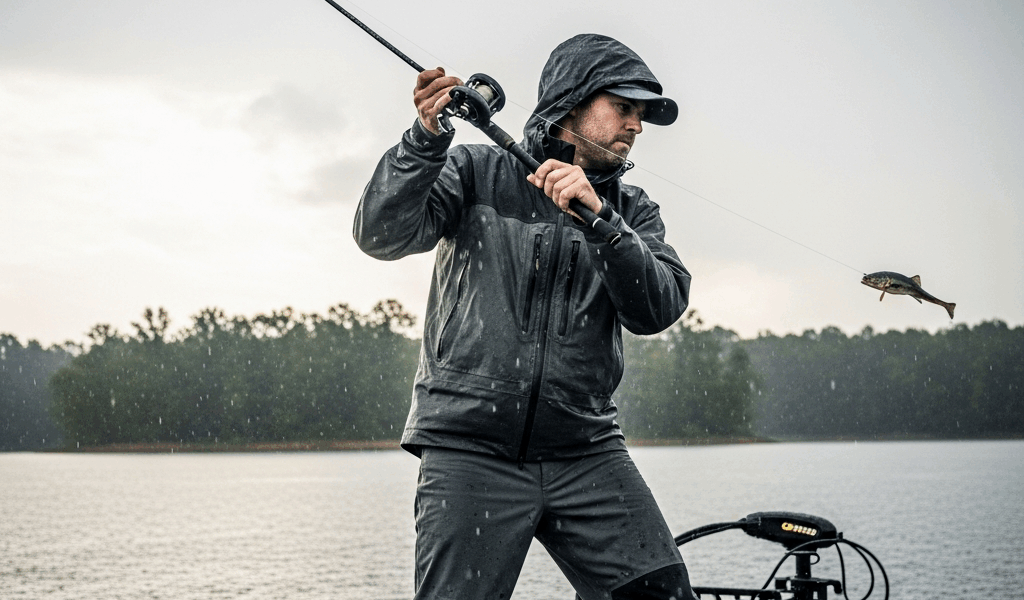
Why Bass Feed After Rain — The Short Answer
Bass fishing after rain is genuinely some of the best fishing you can have all season, and that’s not just angler folklore. The short answer: yes, bass feed aggressively after rain, particularly after light to moderate storms. Three things happen simultaneously that work in your favor — barometric pressure drops before and during the storm, which triggers a feeding window; runoff muddies the water near banks and gives bass confidence to move shallow and ambush; and surface disturbance from rainfall spikes dissolved oxygen levels. I’ve had my best largemouth days of the year within two hours of a storm clearing. That’s not coincidence. There’s real mechanism behind it, and once you understand why it works, you’ll stop wondering whether to go out after a rain and start planning around it.
The Science — What Rain Actually Does to Bass Behavior
Most fishing articles tell you that bass “get active” after rain. That’s true but useless. Here’s what’s actually happening beneath the surface.
Barometric Pressure and the Feeding Trigger
Bass have a lateral line and a swim bladder — two pressure-sensing systems. When barometric pressure drops, which starts happening hours before rain arrives, bass feel it. The prevailing understanding among fisheries biologists and serious tournament anglers is that falling pressure prompts bass to feed heavily, likely because they anticipate a period where conditions may become less favorable. Think of it as a biological cue to load up before the weather event fully hits.
The feeding window tied to pressure isn’t just post-rain. It starts on the drop. So the hour before a storm, the storm itself (if it’s light), and the period right after the front passes are all productive windows. What kills the bite is stable high pressure — not rain itself.
I made the mistake early on of waiting until the skies fully cleared before heading out, convinced that bright post-rain days were the move. Lost hours of prime feeding window that way. The bite often peaks while the clouds are still overhead and the pressure is still low or just beginning to climb.
Murky Water as Ambush Cover
Runoff carries sediment, tannins, and debris into the water. This stains the water near banks, creek mouths, and any entry point where drainage enters the lake or river. Bass are visual predators but they’re also ambush predators — and murky water removes one of their primary disadvantages. In clear water, bass have to commit to cover and wait for prey to come very close. In stained water, they can hold shallower, move more freely, and attack from tighter angles without being spotted first.
That’s why post-rain bass often move up. They’re not confused or displaced. They’re hunting in conditions that favor them.
Oxygen Levels
Rain physically agitates the water surface. That mechanical mixing pushes oxygen into the upper water column. In summer especially, when deep water gets thermally stratified and oxygen-depleted, a good rain event can make shallow and mid-depth zones dramatically more hospitable. Bass that were holding deep out of necessity suddenly have more options. They move. Movement means opportunity.
Probably should have opened with this section, honestly — because the oxygen piece is what most casual anglers completely skip over, and it explains why summer post-rain fishing is particularly productive compared to the same rain falling in October.
Light Rain vs Heavy Rain vs After the Storm
Here’s where most articles fail completely. They treat “bass fishing after rain” as one single scenario. It’s not. These are three distinct fishing situations with different expectations and tactics.
Light Rain During the Event
This is the best of the three. Low light conditions reduce surface glare and make bass less wary of overhead threats — that means birds, yes, but also fishing line and lure silhouettes. Pressure is falling or low. The water is just starting to color up near banks, giving bass confidence to be aggressive. If I had to pick one window and one only, it’s this one. Throw moving baits. Cover water. The bass are searching.
Heavy Rain — Tougher Than People Admit
A hard downpour causes problems. Visibility in the water column can drop to near zero near shore. Runoff brings cold water, which can temporarily suppress feeding in temperature-sensitive fish. Current from heavy flow pushes baitfish around unpredictably, and bass sometimes suspend rather than chase. It’s also just dangerous to be on the water in a hard storm, especially with lightning. Heavy rain isn’t a bass fishing bonanza. It’s often the toughest part of the whole weather cycle. Move offshore. Fish slower. Drop shot rigs and football jigs on deeper structure will outperform shallow presentations in a hard rain scenario.
Post-Storm Clearing — The Second Window
After the front fully passes and pressure begins to stabilize, there’s another feeding window. Bass that fed before and during light rain may have pulled back slightly during heavy rain. As conditions calm, they come back out. This window can last two to four hours post-storm. The light is often dramatic — that particular grey-gold light you get as heavy clouds break — and bass activity can be exceptional. This is the window most anglers catch because it’s the safest and most comfortable to fish. Nothing wrong with that. Just know you may have missed the first wave.
Best Lures and Techniques for Post-Rain Bass
Stained or murky water calls for specific presentations. Visibility is low, which means you want lures that appeal to senses other than sight — sound, vibration, displacement. Here’s what works and why each one earns its place in the box.
Spinnerbaits
The top choice for stained water. A 3/8 oz or 1/2 oz spinnerbait with a double willow or Colorado blade setup generates vibration that bass detect through their lateral line from several feet away. In chartreuse-and-white or straight white, it’s visible in murky water and triggers reaction strikes. I’ve been throwing a Strike King KVD 1/2 oz double willow in chartreuse white for years in post-rain conditions and nothing in that price range ($5–$7) outperforms it. Burn it just below the surface along flooded grass edges or slow-roll it through two to four feet of water near muddy runoff points.
Crankbaits Near Channel Edges
Squarebill crankbaits in the 1.5 size range — Rapala Squarebill or BOOYAH Flex Series — work exceptionally well when bass have stacked up near the drop from flooded flats to the main channel. The runoff pushes baitfish (shad, minnows) along these contours, and bass position on the edge to intercept. A chartreuse or crawfish-colored squarebill bouncing off woody cover or rocks along that edge will produce. Keep the retrieve steady with occasional deflections off structure.
Topwater — The 30-Minute Window
Right when rain stops, if there’s still cloud cover and the water surface is calm again, throw topwater. A Heddon Zara Spook or a Whopper Plopper 110 along any grass edge or floating wood. Bass are still shallow, still aggressive, and the low light combined with the oxygenated surface layer makes them look up. This window is short — maybe thirty minutes before the clouds fully break — but it can produce some genuinely explosive strikes. Don’t skip it out of habit.
Swim Jigs Along Flooded Vegetation
When rain raises water levels and floods grass margins that were previously dry or barely submerged, bass move in immediately. They’re hunting. A 3/8 oz swim jig in white or green pumpkin with a matching paddle tail trailer, worked slowly through the top of submerged grass, is one of the most productive post-rain presentations I know. The key is keeping it in contact with the vegetation — not over it, through it. Strikes come when the jig clears a clump and falls.
Color Notes for Stained Water
Chartreuse and white are your go-to base colors. In darker stained water, add contrast — black and blue works. In lighter stain, natural whites and chartreuse-whites read better. Fire tiger (chartreuse with orange highlights) is underrated in post-rain conditions. Avoid natural shad patterns in very dirty water — they disappear.
Where to Find Bass After Rain
Knowing what to throw matters a lot less than knowing where to throw it. Post-rain bass positioning is actually predictable if you understand where the water changes.
Runoff Entry Points — Culverts and Creek Mouths
Wherever water enters the main lake or river body after a rain, bass congregate. Culverts under roads that drain into coves, small creek mouths, and drainage ditches are all worth checking first. The incoming water carries food — worms, insects, small baitfish displaced by current. Bass position just outside the main current flow, where they can intercept food without fighting heavy water. Cast across the current and let your lure swing into the slack zone.
Flooded Vegetation Margins
Any rise in water level floods previously dry or shallow areas. Bass exploit this immediately. Grass edges, cattail lines, flooded bushes along the bank — these are all prime locations. The fish move in to hunt newly available prey. Work parallel to these edges rather than casting into the middle of the vegetation. Bass will be right on the outer margin.
Secondary Points
Main lake points get pressure. Secondary points — the smaller points inside coves and pockets — are where post-rain bass often stage, especially as the storm clears and they begin transitioning between shallow feeding areas and deeper holding structure. A secondary point with some wood or rock on it, positioned near a creek channel, is about as good as it gets for post-rain bass location. Fish the tip and both sides.
Shallow Wood Cover Near Mudlines
After rain muddies water near the banks, there’s often a visible mudline — a boundary between stained water near shore and clearer water further out. Bass sit just inside that mudline, using it as visual camouflage while they watch into the clearer water for prey. Find laydown logs, stumps, or dock pilings near that boundary and work them carefully. This is a specific and productive pattern that most anglers drive past without recognizing it.
Surprised by how many times I’ve watched other boats work well out from the bank on post-rain days while completely ignoring the mudline four feet from the shore. That’s where the fish are. Get closer to the bank than feels reasonable, and you’ll find them.




Stay in the loop
Get the latest fish blog updates delivered to your inbox.