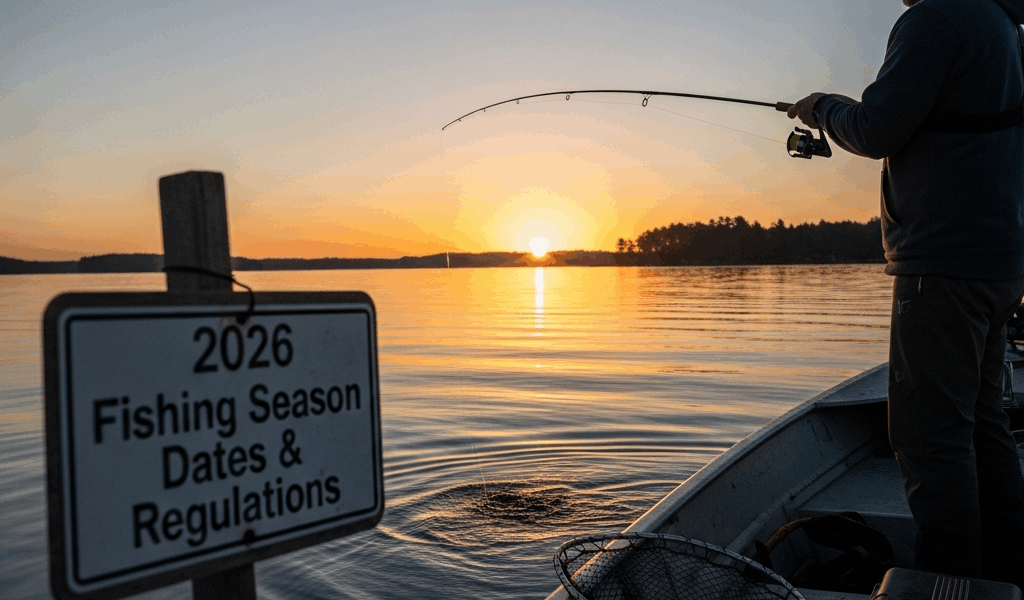
2026 Recreational Fishing Season Dates and Key Regulations
Figuring out 2026 recreational fishing season dates has gotten complicated with all the regulation changes, quota battles, and pending Federal Register publications flying around. As someone who’s been chasing striped bass and red snapper for the better part of fifteen years, I learned everything there is to know about showing up to the water completely unprepared. Cost me an eight-hour drive to Hatteras once — middle of a Tuesday, rods rigged, cooler packed — only to find out the season wasn’t open. Never again. What follows breaks down opening and closing dates by region, flags what actually changed for 2026, and covers licensing so you’re not standing on the dock doing math about whether your state card covers federal waters.
2026 Season Opening Dates by Region
NOAA Fisheries and individual state agencies have finalized or proposed most 2026 recreational season frameworks. A handful of species-specific dates are still pending final rule publication in the Federal Register as of early 2026 — bookmark the official sources linked at the bottom. That said, here’s what’s confirmed or expected across the major regions.
Northeast — New England and Mid-Atlantic
The Northeast runs primarily through the Atlantic States Marine Fisheries Commission, coordinating with NOAA’s Greater Atlantic Regional Fisheries Office. Striped bass headlines the season here — more on that below, because 2026 brings real changes. Most inshore species follow state-specific calendars that kick off late April or early May.
- Black Sea Bass (Federal — North of 35°47.8′ N): Opens May 19 and runs through December 31. There’s a summer closure from June 20 through July 18 in some state waters. Check your state addendum — this one varies more than people expect.
- Summer Flounder (Fluke): Open season starts May 1 in most Mid-Atlantic states, closing around September 28. New York, New Jersey, and Connecticut each carry minor state-level tweaks on bag and size limits.
- Scup (Porgy): Open year-round federally. The higher possession limit window — 30 fish maximum — runs July 1 through October 14 for most of the region.
- Atlantic Striped Bass: Read the next section before you go out. Seriously.
Tautog seasons vary sharply by state. Connecticut opens April 1. New York typically runs a spring window from April 1 through May 15, shuts down, then reopens in the fall. Don’t guess on this one — verify your specific state window before you trailer the boat.
Southeast — South Atlantic States
South of Cape Hatteras down through Florida’s Atlantic coast, NOAA’s Southeast Regional Office and the South Atlantic Fishery Management Council set the framework. Red snapper, grouper, and cobia drive most of the planning here — and red snapper in particular has been grinding through ongoing quota disputes that directly affect how many days you’ll actually get in 2026.
- South Atlantic Red Snapper: The 2026 recreational season is currently projected for a very limited open window — potentially as few as 3 to 5 days total for the federal EEZ. Exact dates get announced in the Federal Register. State waters vary by state, so that’s a separate lookup.
- Gag Grouper (South Atlantic): Season opens June 1 and closes December 31. Two-fish bag limit per person.
- King Mackerel: Open year-round in the South Atlantic zone. Bag limits differ between the northern and southern zones — worth confirming which one applies to your launch point.
- Cobia: Runs January 1 through December 31 with a one-fish bag limit and a 36-inch fork length minimum.
Gulf Coast
The Gulf of Mexico is where red snapper conversations get loud, fast. The Gulf of Mexico Fishery Management Council issues a separate recreational quota from the South Atlantic — always has — and 2026 looks like a longer season than recent years based on stock assessment improvements. That’s actually good news worth sitting with for a second.
- Gulf Red Snapper (Federal EEZ): Projected season opens June 1, 2026. Expected season length runs approximately 50 to 60 days, though final days get confirmed after quota calculations close out. This is a meaningful improvement over the 39-day window anglers had in 2025.
- Amberjack (Greater): Still closed to recreational harvest in the Gulf through at least mid-2026. The rebuilding plan remains in effect — this isn’t the reopening year.
- Grouper (Various Species): Gag grouper opens July 1 and runs through December 31. Red grouper is open January 1 through December 31, with a three-fish aggregate bag limit across most grouper species combined.
- Spanish Mackerel: Gulf zone open year-round with a seven-fish bag limit.
Texas, Louisiana, Mississippi, Alabama, and Florida all maintain separate state water regulations that can differ significantly from federal EEZ rules. Fishing inside nine nautical miles off Florida’s Gulf coast — or three nautical miles off most other Gulf states — means state rules apply, full stop.
Pacific Coast
Pacific Coast recreational seasons run through the Pacific Fishery Management Council. Salmon and halibut dominate the conversation, and 2026 carries some notable shifts driven by chinook stock concerns tied to the Sacramento River system.
- Pacific Halibut: Seasons run May through November depending on the management area. Area 2A — covering Washington, Oregon, and California — typically opens in late May, with quota-based closures possible mid-season.
- Chinook Salmon: Several California ocean salmon fisheries face reduced seasons or emergency restrictions in 2026 because of low Sacramento River fall run forecasts. Oregon and Washington coho and chinook seasons open in spring, with specific dates varying by district. Check PFMC’s annual ocean salmon management decisions — these shift every year without much warning.
- Rockfish and Lingcod: California’s CDFW runs complex depth and area restrictions. Some deeper access zones open April 1 in the Southern Management Area in 2026. Lingcod minimum size is 22 inches total length statewide.
Great Lakes
Great Lakes fishing runs at the state level — Great Lakes Fishery Commission oversight applies to some species, but there’s no federal saltwater season framework here. Walleye, salmon, and lake trout seasons attract serious planning effort, sometimes more than coastal trips.
- Walleye: Open water season typically begins the first Saturday in May in Michigan and Wisconsin. Ohio’s Lake Erie season runs year-round with size and bag modifications by zone.
- Lake Trout: Spring ice-out through November in most zones. Michigan’s Upper Peninsula inland lakes carry separate regulations from the Great Lakes themselves — easy thing to miss.
- Chinook and Coho Salmon: Great Lakes salmon runs peak August through October. Most states open their Great Lakes tributaries for salmon in late August or early September.
Key Species — What Changed for 2026
Probably should have opened with this section, honestly. Static restatements of 2025 rules help nobody. Here’s what’s actually different this season.
Atlantic Striped Bass
This is the big one. ASMFC’s Amendment 7 implementation continues — coastwide measures designed to reduce recreational harvest by approximately 14%. The 2026 slot limit framework varies by state, but the primary slot in most Atlantic coastal states is one fish between 28 and 31 inches, with one trophy fish over 35 inches allowed in some jurisdictions. The old 28-inch minimum single-fish rule that certain states ran under has been revised. Connecticut, Rhode Island, Massachusetts, and New York are operating under similar frameworks. Maryland and Virginia have slight variations. Don’t make my mistake — verify before you go out, not in the parking lot at the ramp.
Gulf Red Snapper
Bag limit stays at two fish per person per day. Minimum size holds at 16 inches total length. What changed is the projected season length — improved biomass estimates from the 2024 stock assessment suggest the recreational quota can support a longer window than last year’s 39 days. Confirm the final opening date closer to June 1 through NOAA’s Southeast Regional Office. Don’t book the trip based solely on the projection.
Menhaden
But what is menhaden to most recreational anglers? In essence, it’s bait — the chunk you thread onto a hook for stripers or bluefish. But it’s much more than that in terms of ecosystem function, which is exactly why ASMFC tightened Atlantic menhaden harvest caps again for 2026. Practically speaking: bait availability will be slightly tighter at tackle shops this season, and prices will probably reflect it.
Pacific Salmon — Reduced Access in California
Frustrated by the Sacramento River winter chinook situation, NMFS moved to impose emergency restrictions that trim California’s 2026 ocean salmon season in certain management areas. Anglers targeting chinook out of San Francisco Bay and Bodega Bay should check the PFMC website before booking any trips — this one changes rapidly, sometimes within weeks of a season opener.
Gulf Amberjack — Still Closed
Greater amberjack remains under a recreational closure in the Gulf of Mexico EEZ. The stock is rebuilding, but 2026 is not the reopening year. Lesser amberjack and banded rudderfish sit under separate rules — legal to target but with tight bag limits. Worth knowing before you pull one over the rail.
Saltwater License Requirements by State
Federal Highly Migratory Species permits, NOAA’s Recreational Saltwater Fishing Registry, and state saltwater fishing licenses all operate on completely different tracks. That’s what makes this endearing to us anglers — three separate bureaucracies, zero overlap. Here’s a simplified breakdown by coastal region. This is not a substitute for reading your state’s official current requirements directly.
| State | State Saltwater License Required | Federal Registry or Permit | Notes |
|---|---|---|---|
| Maine | Yes | NOAA Registry (free) | Exempted if licensed through state reporting system |
| Massachusetts | Yes | NOAA Registry (free) | State manages its own data-sharing agreement with NOAA |
| New York | Yes (Recreational Marine Fishing License) | Exempt via state | $10 for residents, $15 for non-residents (2026 fee) |
| New Jersey | Yes | Exempt via state | Free resident license available |
| Virginia | Yes (Saltwater Fishing License) | Exempt via state | $12.50 resident annual |
| North Carolina | Yes | Exempt via state | Coastal Recreational Fishing License required |
| Florida | Yes (Saltwater Fishing License) | Exempt via state | Residents 65+ fish free |
| Texas | Yes (Saltwater Fishing Package) | Exempt via state | Combo freshwater/saltwater licenses available |
| California | Yes (Sport Fishing License) | Separate stamp for salmon | Ocean Enhancement Validation required for some species |
| Oregon | Yes | Pacific HMS permit for tuna | Salmon and steelhead tags sold separately |
| Washington | Yes (Saltwater Fishing License) | Pacific HMS permit for tuna/billfish | Halibut requires a WDFW halibut card |
If you’re fishing for highly migratory species — bluefin tuna, yellowfin, mako shark — a federal HMS permit is a separate requirement entirely, layered on top of whatever your state requires. While you won’t need a wall full of permits for a basic inshore trip, you will need a handful of the right credentials stacked correctly before you head offshore for tuna or billfish. HMS might be the best option to sort out first, as offshore fishing requires federal documentation above and beyond state licensing. That is because NOAA tracks HMS harvest independently from state reporting systems — they don’t automatically talk to each other.



Stay in the loop
Get the latest fish blog updates delivered to your inbox.