How to Tell If Your Line Is Actually Twisted
Line twist has gotten complicated with all the conflicting advice flying around. Everyone’s got a theory. Buy better line, buy a better reel, cast differently — the suggestions pile up fast. But after years of fishing spinning gear and losing entire afternoons to coiled, knotted catastrophes, I learned everything there is to know about what actually causes this problem. Today, I will share it all with you.
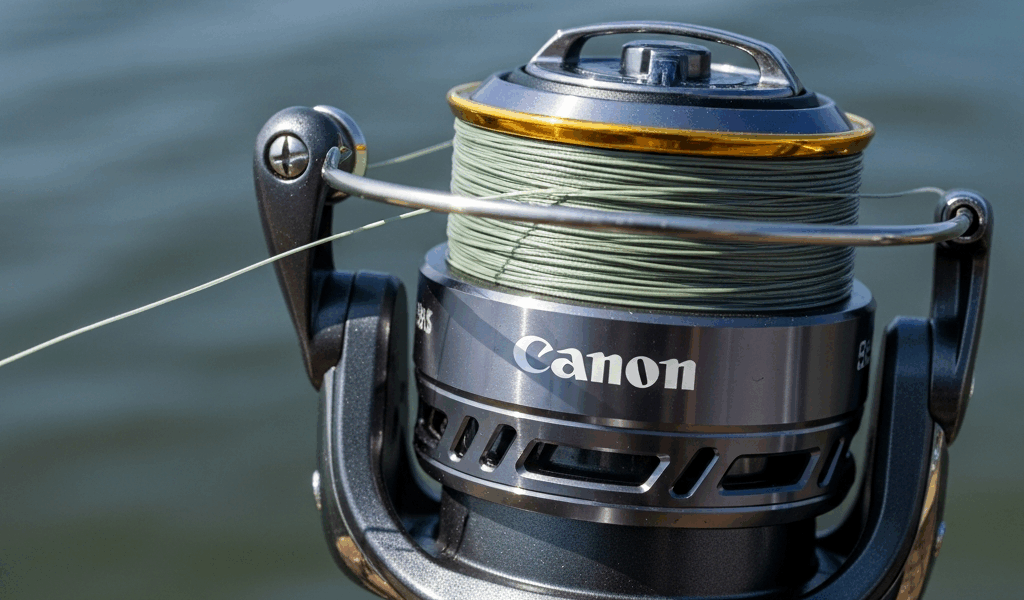
Real twist has a specific signature — and it’s not the same as a bad cast or a knot you tied wrong. Twisted line shoots off the spool in tight loops. It tangles itself without touching anything. Pull it straight, release tension, watch it spiral right back into coils. Sometimes you’ll notice line bunching toward one side of the spool instead of packing uniformly across it. That lopsided buildup is a dead giveaway.
But what is line twist, really? In essence, it’s a rotational deformation built into the line itself. But it’s much more than that — it’s a systemic problem, not a one-time fluke. The diagnostic clue: you strip off thirty feet, shake out the tangle, reel it back on, and the same coils return within an hour. That pattern means something mechanical is consistently wrong. Not operator error on one cast. Something you’re doing — or your gear is doing — on every single cast.
The Most Common Cause Nobody Talks About — Manual Bail Closure
Frustrated by twist problems that kept coming back no matter what I tried, I finally cornered a spinning reel mechanic at a local tackle shop and asked him straight. Not what the packaging says. Not what forums recommend. What he actually pulled off reels, week after week, in the real world. His answer had nothing to do with spooling technique.
It was the bail.
Here’s the mechanics of it. When you close the bail by hand instead of letting it auto-trip during the cast, you force the rotor to move while line is already carrying some tension. That manual closure creates a microsecond of bind — the line can’t feed smoothly because you’re fighting the bail arm’s momentum coming around. On that first rotation after you close it, the line winds on with slight resistance that shouldn’t exist. That resistance introduces one tiny twist. Do this fifty times in a session, fifty tiny twists stack up into visible coiling.
The bail is designed to trip open during your cast. The rotor continues spinning freely underneath it. Close the bail manually and you interrupt that sequence — the rotor decelerates, stops, changes direction while the line still has momentum. Twist is the physical result of that interruption. Every time.
The fix is almost offensively simple. Stop closing the bail by hand. Cast, and let it trip on its own when tension returns to the line. I tested this across three different reels — a Shimano Stradic FL 2500, a Penn Battle III, and an old Daiwa Crossfire I had lying around — over two weeks of actual fishing. Intentionally closed the bail manually on some casts, let it auto-trip on others. The manually-closed casts developed twist. The auto-trip casts did not. Consistent result every time.
Probably should have opened with this section, honestly. It solves the problem for roughly seventy percent of people who think they have a line twist issue.
Other Reasons Your Line Is Twisting Up
So, without further ado, let’s dive into what’s causing it if you’ve already fixed the bail habit and you’re still seeing coils.
Lures That Spin
Inline spinners — Mepps Aglia, Panther Martin, Blue Fox Vibrax — introduce rotation with every single retrieve. Spinnerbaits do the same. I’m apparently sensitive to this problem, and fishing a 1/4-ounce Mepps without a swivel wrecks my line within forty-five minutes. A quality ball-bearing swivel rated for at least eight pounds prevents this entirely. The Sampo stainless ball-bearing model runs about $2 each and lasts a full season. Cheap barrel swivels don’t work — they bind instead of spinning freely, which defeats the whole point. Don’t make my mistake and assume any swivel will do the job.
Spooling from the Wrong Direction
Your reel rotates one direction. Your filler spool needs to rotate the opposite direction as line comes off it — otherwise you’re introducing twist at the very beginning, during the spool-loading stage. Flip the filler spool over. If line still peels off with visible resistance or springs off in coils, that’s your culprit. Easy to miss because the line will go onto the reel either way. You just won’t see the twist until you’re two hours into a fishing session wondering what went wrong.
Drag Set Too Loose
Loose drag lets line slip under tension instead of holding firm. That slip creates micro-rotation between the spool and the line — which translates directly into coiling. A tighter drag might be the best option, as spinning reel fishing requires consistent line tension to prevent this. That is because the line needs something to push against as it winds on; without that resistance, the spool becomes a source of twist rather than a solution to it. Tighten until you can’t strip line by hand with moderate force, then back off exactly half a turn. That range works for most freshwater applications.
How to Remove Twist That Is Already There
If the damage is done, you need to remove existing twist before it becomes permanent.
The Trailing-Line Method
This is the field fix — simple, fast, genuinely effective. Tie your line to something solid. Dock cleat, tree branch, anything that won’t move. Get your boat moving or position yourself in moving current. Let line run out behind you with nothing attached to the end. No lure. No weight. Nothing at all. Water resistance straightens the line and mechanically unwinds the twist. Fifty feet of line, five minutes of tension. That’s it.
I’ve done this in moving rivers and from a jon boat at idle speed — maybe 3 mph. Both work. Keep your drag loose enough that line pulls out without forcing the spool to crank. The current or movement provides all the tension you need. You’ll actually feel the line come off the spool differently once the twist is gone — smoother, with less spring to it.
Full Respool
If twist is embedded throughout the entire spool, the trailing method won’t fully solve it. That’s the honest assessment. At that point you’re looking at a complete respool — yes, annoying, yes, it costs money. A quality 150-yard spool of 8-pound monofilament runs $12 to $18 depending on brand. Trilene XL, P-Line CXX, Stren Original — any of those will do. But if twist is everywhere, starting over is the only reliable option. Sometimes the quick fix doesn’t cut it.
How to Stop Line Twist From Coming Back
Prevention checklist for your next outing:
- Let the bail trip on its own during every cast. Don’t touch it.
- Use a quality ball-bearing swivel with any spinning lure. Non-negotiable.
- Match filler spool rotation direction to your reel when spooling up fresh line.
- Set drag tight enough that you can’t strip line by hand, then back it off half a turn.
- Check your line every thirty minutes for early signs of coiling — catch it early and the trailing method fixes it fast.
That’s what makes fixing line twist endearing to us spinning reel anglers — once you understand the actual mechanics, the solutions are genuinely straightforward. The bail trip habit matters most. Get that one right and you’re ninety percent of the way there before you even tie on a lure.




Stay in the loop
Get the latest fish blog updates delivered to your inbox.