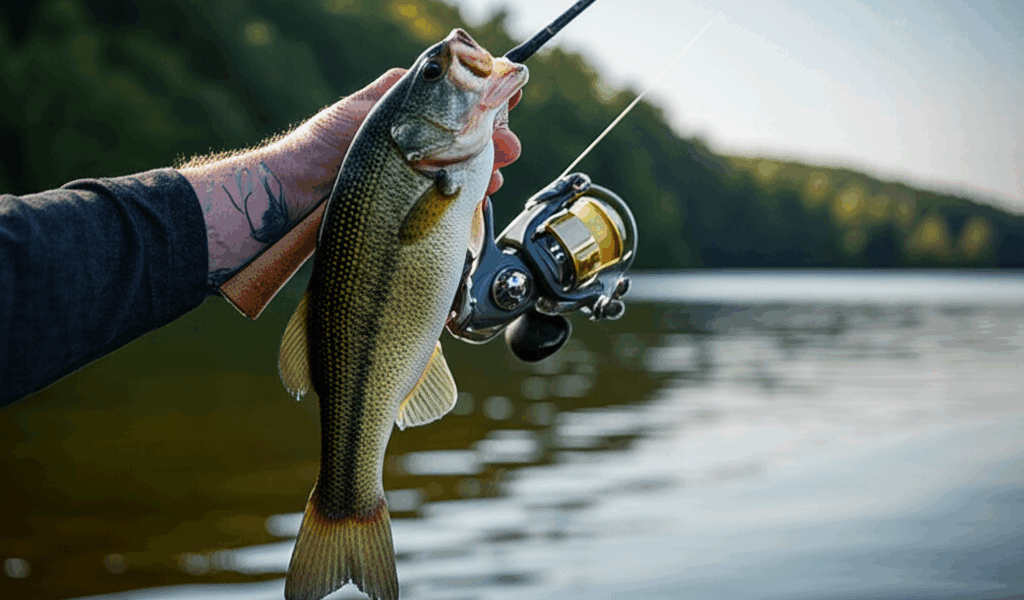
Catching largemouth bass has gotten complicated with all the techniques and gear flying around these days. As someone who has fished for bass in 15 different states over 20+ years, I learned everything there is to know about what actually puts fish in the boat versus what just sounds good in magazine articles. Today, I will share it all with you.
That’s what makes bass fishing endearing to us lifelong anglers — they’re everywhere, they fight hard, and they reward effort. Put in the time to understand them and you’ll catch fish when others are struggling.
Understanding How Bass Actually Think
Largemouth bass are ambush predators. They hide in cover, wait for something to swim by, and explode on it. Their massive mouths can engulf prey up to half their body length. Understanding this changes how you fish for them.
Bass rely heavily on their lateral line to detect vibrations. In murky water, vibration matters more than how your lure looks. In clear water, natural colors and subtle presentations win. Match your approach to water clarity.
Probably should have led with this section, honestly: temperature drives everything. In water below 50°F, bass digest food slowly and barely eat. Between 65-80°F, they’re feeding machines. Above 85°F, they get lethargic and go deep. Check water temperature before you start fishing and adjust accordingly.
Seasonal Patterns That Actually Work
Pre-Spawn (Water 48-55°F)
Male bass move shallow first to scout spawning areas. Target transition zones where deep water meets spawning flats. Creek channels, points, and secondary points hold concentrations of fish getting ready to spawn.
Lipless crankbaits and jerkbaits work great during pre-spawn. Bass want easy meals before the energy-intensive spawn. Slow your retrieve down until you figure out how fast they want the bait that day.
Spawn (Water 55-70°F)
Bass build nests in 2-6 feet of water on hard bottom. Sand, gravel, and clay banks attract spawning fish. Look for circular depressions near cover like docks, laydowns, and stumps.
Sight fishing spawning bass requires stealth and patience. Polarized sunglasses are essential — you can’t catch what you can’t see. Cast past the bed and drag soft plastics slowly across the nest. Tube baits and wacky-rigged senkos trigger defensive strikes.
Post-Spawn (Water 70-75°F)
Exhausted females recuperate in nearby cover. Males guard fry for 1-2 weeks before abandoning them. Target shady areas where spent fish are resting up.
Topwater fishing gets good post-spawn. Buzzbaits, walking baits, and poppers draw explosive strikes. Early morning and late evening are prime time.
Summer (Water 75-85°F)
Bass relate to offshore structure during summer. Points, humps, ledges, and brush piles hold fish. Feeding windows shrink to early and late as temperatures peak.
Deep diving crankbaits, Carolina rigs, and drop shots probe summer structure effectively. Electronics become critical for finding offshore fish. Mark waypoints when you catch fish and build a pattern.
Fall (Water 65-55°F)
Cooling water triggers aggressive feeding as bass prepare for winter. Shad and bluegill move shallow, and bass follow them. Creek arms and backs of pockets concentrate baitfish.
Match the hatch with shad-colored crankbaits, spinnerbaits, and swimbaits. Fall bass school heavily — when you catch one, work the area thoroughly. Keep moving to cover water efficiently.
Winter (Water Below 50°F)
Bass congregate in deep water near channel swings, points, and standing timber. Metabolism slows dramatically. They might eat once every few days. Slow way down and fish small baits meticulously.
Gear That Makes a Difference
You don’t need 20 rods. You need the right rod for what you’re doing. A medium-heavy baitcaster handles most bass techniques. Add a medium spinning rod for finesse fishing and you’re covered.
Line choice matters more than most people think. Fluorocarbon for clear water and bottom contact baits. Braid for topwater and heavy cover. Monofilament as a topwater leader or for budget-conscious beginners.
Good hooks catch more fish than expensive lures with cheap hooks. Replace treble hooks on bargain crankbaits. Use quality EWG hooks for soft plastics. Sharp hooks mean solid hooksets.
Lures That Consistently Produce
If I could only use five lures: Texas-rigged plastic worm, spinnerbait, square-bill crankbait, jig with trailer, and a topwater walking bait. These cover nearly every situation bass fishing presents.
Color matters less than presentation. That said, green pumpkin soft plastics work almost everywhere. Shad patterns in crankbaits and spinnerbaits are universal. Black and blue for stained water. Keep it simple.
The Biggest Mistake Most Bass Anglers Make
Fishing too fast in the wrong spots. Covering water matters, but only if you’re covering the right water. Identify high-percentage areas first, then fish them thoroughly before moving on.
Pay attention to what caught fish. Same depth? Same cover type? Same retrieve speed? Bass often school by size and behavior. When you figure out what one fish wanted, others in that area probably want the same thing.


Stay in the loop
Get the latest fish blog updates delivered to your inbox.