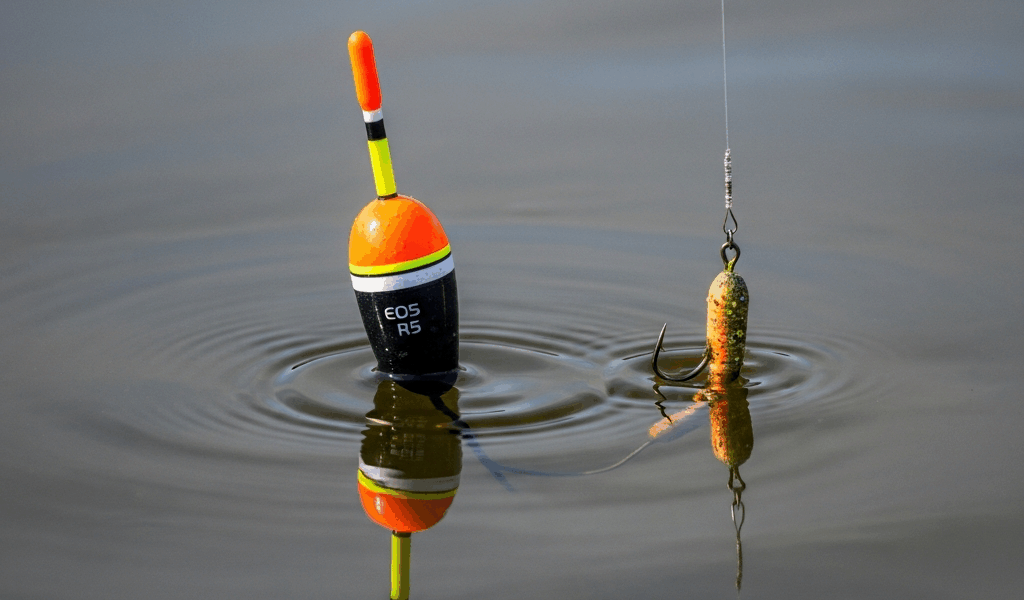
Why Your Bobber Never Goes Down When Fishing
Bobber fishing has gotten complicated with all the bad advice flying around. Everyone’s got a theory. Moon phases. Water temperature. Barometric pressure. Meanwhile, your bobber just sits there like it’s been glued to the surface, and you’re standing on the bank wondering if there’s a single fish left in this lake.
This article includes affiliate links. We may earn a commission at no extra cost to you.
As someone who has logged more fishless mornings than I’d like to count, I learned everything there is to know about why a bobber refuses to move. Today, I will share it all with you. The honest answer? It’s almost never bad luck. It’s almost always something mechanical — something you can actually fix right now, on the water, before you pack up and go home.
Your Depth Is Probably Wrong
Start here. This is the culprit in roughly seven out of ten cases.
Fish don’t hold at the same depth all day. Sometimes they’re hugging the bottom. Sometimes they’re mid-column. Sometimes they’re drifting just under the surface film. A bobber set too deep puts your bait in the mud. Set too shallow and you’re fishing a foot above every single fish in the area. Neither ends with a bite.
Here’s the method I use. Cast out and watch how the bobber sits. It should stand completely upright and vertical — that tells you the weight is balanced. From there, set your bobber stop so the bait hangs roughly 6 to 12 inches off the bottom as a starting point. If the bobber tips sideways or goes flat after casting, your bait is dragging bottom. Straight up means you’ve got clearance.
There’s a trick called the pencil test — probably should have mentioned it sooner, honestly. Drop a weighted sinker near your spot and see how deep it actually is. Most people skip this and just guess. Fishing 8 feet of water versus 4 feet of water changes everything about where that bobber should sit. Don’t make my mistake of assuming.
Fish a depth for ten minutes. Nothing? Slide the bobber stop up 18 inches and try again. Keep moving it in small increments until you get a bite or run out of water column. Tedious? Yes. Does it work? Every time.
Your Hook Size Is Scaring the Fish
Probably should have opened with this section, honestly.
An oversized hook on small bait is a bite killer — and it’s everywhere. Here’s what happens: a fish mouths your bait, feels the thick wire of a size 2 or 4 hook, and drops it immediately. It never commits. Your bobber never dips because the fish never fully takes the bait. The whole thing is over in half a second and you didn’t feel a thing.
For panfish — bluegill, crappie, sunfish — you want a size 6, 8, or 10 hook. Small trout on a bobber, same range. These sizes let a live minnow or worm move the way it’s supposed to. I’m apparently a size 8 guy and Mustad Aberdeen hooks work for me while bigger wire hooks never seem to get the same results in shallow ponds.
I switched from a size 4 to a size 6 once while fishing bluegill at a small pond about three miles from my house. Same depth. Same spot. Same worm. Within five minutes I had three bites. Three. That single size change was the whole difference.
The Bait Has Stopped Working
Live bait dies. It dries out, goes limp, stops smelling like food. By 8:15 a.m., the nightcrawler you threaded on at 7:00 is a completely different creature — still technically on your hook, but not doing much to convince anything to eat it.
Wax worms get soft and unappetizing fast. PowerBait loses most of its scent intensity after sitting in water for about 15 to 20 minutes, especially in direct sun. That’s what makes fresh bait so endearing to us anglers — it actually produces bites.
My rule is simple: refresh every 15 to 20 minutes if you’re getting zero action. Reel in. Fresh worm. Cast back out. Yes, it feels repetitive. Yes, it works.
When threading a worm, don’t bunch it. Run the hook through the collar — that little band near the head — and let the rest dangle. A worm that hangs naturally and moves looks like live prey. A worm compressed into a tight ball on the hook looks like a dead worm. Fish know the difference. Don’t make my mistake of thinking they don’t.
You Are Fishing in the Wrong Spot
Fish aren’t everywhere. They’re somewhere specific — shade lines, weed edges, drop-offs beside docks, the mouth of a creek where cold water pushes into a warm lake. Frustrated by slow action one morning, I finally stopped casting into open water and started targeting a weed edge using nothing but observation and a few short casts. Three bites inside of fifteen minutes.
Open water in the middle of a lake at noon is often completely dead. Casting a bobber rig out into nothing and waiting is hope, not strategy.
So, without further ado, let’s be practical about this. Move. Cast 20 to 30 feet to the side. Give it 10 to 15 minutes. Nothing? Move again. Look for overhanging trees, dock shadows, submerged weed beds. Early morning and late afternoon, fish push shallow — but they still want cover. Structure is where bites happen. Open water is where bobbers sit perfectly still for an hour.
Line and Leader Issues That Kill the Bite
Bright monofilament in clear water is visible to fish. A 10 lb bright green mainline cutting through gin-clear water looks like a warning sign. Fish see it. They get cautious. They don’t commit.
In clear or pressured water, drop to a 4 to 6 lb fluorocarbon leader tied directly below your bobber. It’s nearly invisible underwater. A good spool runs about $6 to $9 — Seaguar Red Label or P-Line both work well — and the difference in bites is not subtle.
But what is a slip bobber? In essence, it’s a float that slides freely on your line rather than clamping in place. But it’s much more than that. A properly sized slip bobber — something like the Thill Pro Series Slip Float in the size 1 to 3 range — creates almost no resistance when a fish picks up the bait. The fish doesn’t feel the float fighting back. Standard clip-on bobbers, especially the big red-and-white ones, create drag. Some fish feel that resistance and drop the bait before you ever see a dip.
This new idea took off several years later and eventually evolved into the sensitive slip-float rigs enthusiasts know and rely on today. Small, lightweight, and nearly frictionless — that’s what you want. Heavy hardware belongs on a different kind of rig.
Work through these in order: depth first, then hook size, then bait freshness, then location, then your line setup. Fix one thing at a time. Your bobber will go down.



Stay in the loop
Get the latest fish blog updates delivered to your inbox.