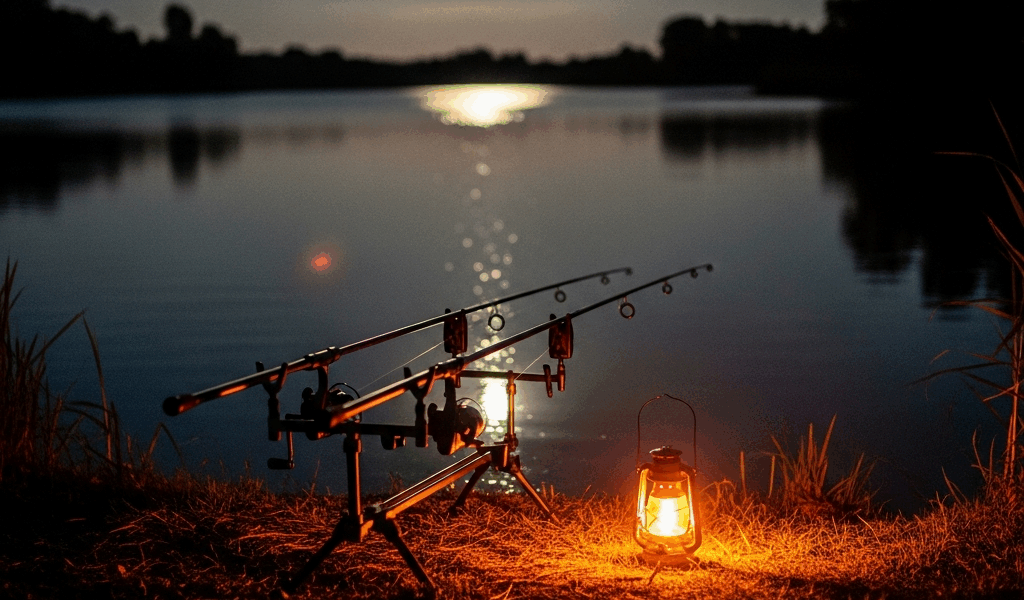
The sun drops below the tree line, the lake goes quiet, and somewhere out past the second sandbar a channel cat is waking up hungry. Night fishing for catfish from the bank is one of the most productive and least complicated ways to fill a cooler — if you set up right before the light fades.
This article includes affiliate links. We may earn a commission at no extra cost to you.
Here is everything you need to know to run a successful night session from shore, from picking your spot to rigging your rods to knowing when to move.
Why Catfish Feed Better at Night
Catfish are built for low-light conditions in a way most gamefish are not. Their barbels — those whiskers around the mouth — are packed with taste and scent receptors that work like underwater radar. Add in a lateral line system that detects vibration and pressure changes in the water, and you have a fish that hunts almost entirely by smell and feel rather than sight.
During the day, especially in summer, catfish hold in deeper water, under structure, or in shaded channels where the light is dim. Once darkness falls, they move shallow. Flats that held nothing at noon become feeding zones by 10 PM. Points and shoreline shelves that were empty all afternoon suddenly have fish cruising them, nose to the bottom, following scent trails.
Summer nights are the prime season for this. Water temperatures stay warm, baitfish activity is high, and catfish metabolism is running hot. They need to eat, and they are programmed to do it after dark. A bank angler sitting on the right spot with fresh bait in the water is in the best possible position to intercept them.
Where to Set Up on the Bank
Location is the difference between catching fish all night and sitting in the dark swatting mosquitoes. Scout your spots during daylight — that is not optional. You need to see the structure, read the bottom contour, and find your casting lanes before you lose the light.
On rivers, look for the outside bends where current has carved deeper channels. The transition from shallow to deep is where catfish patrol. Below low-head dams is another reliable spot — the turbulent water oxygenates and disorients baitfish, creating a natural feeding station. Riprap banks along bridges and causeways hold catfish year-round because the rocks provide cover and attract crawfish.
On lakes, target points that extend into deeper water, especially if there is a creek channel running nearby. The mouths of feeder creeks are excellent after rain when runoff carries food into the lake. Dam faces with rocky bottoms produce consistently because catfish stage along that deep-to-shallow transition line.
One piece of advice that saves a lot of wasted nights: if you are not getting bites within an hour, move. Catfish are either in a spot or they are not. Sitting in a dead zone all night because you already set up your chair is the most common mistake bank anglers make.
The Three Rigs That Work from Shore
You do not need a tackle box full of specialized terminal gear. Three rig styles cover every bottom type you will encounter from the bank.
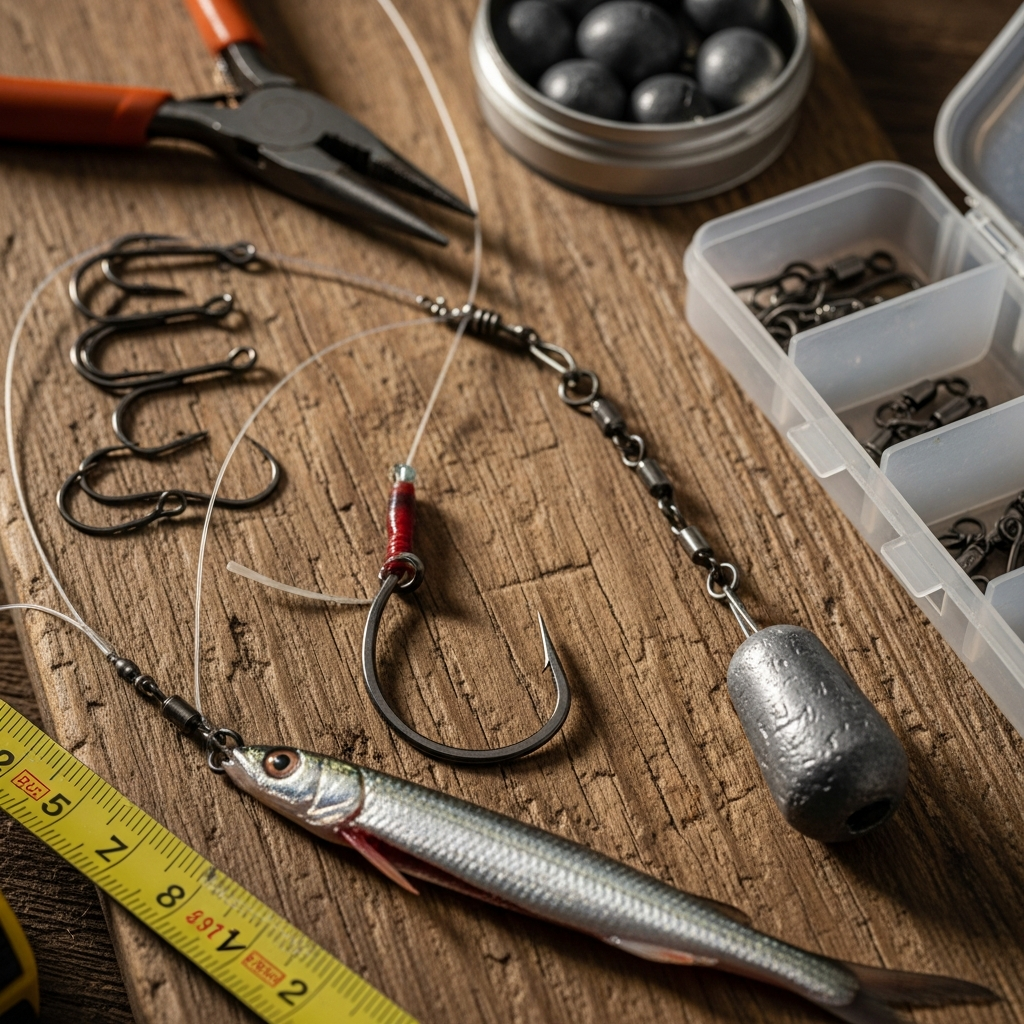
Carolina rig — This is the default for clean sand or mud bottoms. Thread your main line through a 1 to 3 ounce egg sinker, add a small plastic bead to protect the knot, and tie to a barrel swivel. From the other side of the swivel, run an 18 to 24 inch leader of 30 to 40 pound monofilament down to a 5/0 to 7/0 circle hook. The sliding sinker lets a catfish pick up the bait and swim without feeling weight, which means more committed bites and better hook sets with circles.
Three-way rig — Use this on rocky or snaggy bottoms. Tie a three-way swivel to your main line. From one eye, run a 12 to 18 inch dropper of lighter line (15 to 20 pound test) to your sinker. From the other eye, run a 2 to 3 foot leader to your hook. If the sinker hangs in rocks, the lighter dropper breaks and you save your hook and bait. Replace the sinker and keep fishing.
Santee-Cooper rig — This is a Carolina rig with a small peg float or piece of foam added to the leader about 6 inches above the hook. The float lifts the bait off the bottom a few inches, keeping it visible and out of grass, shells, or debris. This rig is deadly over weedy flats where a standard Carolina rig gets buried.
For all three rigs, use circle hooks in the 5/0 to 8/0 range. Circles hook catfish in the corner of the mouth almost every time, which means fewer gut-hooked fish and easier releases if you are practicing catch and release. Do not set the hook with a hard swing — just reel tight and let the circle do its job.
Best Baits for Night Catfish
Fresh cut shad is the top producer for channel catfish on most waters, and it is not particularly close. Cut a fresh shad into 1-inch chunks, hook through the skin side, and let it bleed out scent into the current. The oil and blood trail pulls catfish from surprising distances in the dark.
Chicken liver works well in slower water where you need a strong scent dispersion. It is messy and it falls off the hook if you cast too hard, but in a gentle lob cast to a nearby spot, it is effective and cheap. Thread it on with a bait elastic or a piece of pantyhose if you are tired of losing it on the cast.
Nightcrawlers are the universal backup bait. They catch everything — channels, small blues, even flatheads will eat a fat crawler presented on a three-way rig near structure. Thread the whole worm onto the hook so both ends trail off and create movement.
Stink baits and punch baits have their place, but they are harder to keep on the hook and they tend to attract smaller fish. If you are targeting decent channel cats, fresh cut bait outperforms manufactured baits almost every session.
Whatever bait you use, let it soak. Catfish hunt by scent, and scent takes time to disperse through the water. Cast out, set your rod in the holder, and give it 20 to 30 minutes before moving or re-baiting. Pulling your bait in every five minutes because nothing happened yet is the fastest way to catch nothing.
Gear Checklist for a Night Session
The fishing tackle is only half the equation. Night fishing from the bank requires some gear that daytime anglers never think about, and forgetting any of it will make your night miserable.
Rod holders — Bring real bank rod holders, not forked sticks you found on the ground. PVC sand spike style holders or screw-in bank sticks keep your rod stable and pointed at your line. You should be able to fish two or three rods simultaneously and see all of them from your chair.
Headlamp with red mode — White light kills your night vision and can spook fish in shallow water. A headlamp with a red LED mode lets you bait hooks, tie rigs, and check your bait without blinding yourself. Keep it on your head, not in the tackle box where you will never find it when you need it.
Clip-on bite alarms — Small electronic alarms that clip to your rod tip or line and beep when a fish pulls. They cost $10 to $20 and let you actually relax between bites instead of staring at three rod tips in the dark trying to detect a twitch.
Line — Spool up with 30 to 50 pound braided main line. Braid has near-zero stretch, which means you feel bites at distance, and it is thin enough to cast well on medium-heavy rods. Catfish are not line-shy, especially at night, so there is no reason to fish light.
The unglamorous stuff — Bug spray, a cooler for your bait and your catch, a towel for handling fish and wiping slime off your hands, pliers for hook removal, and a lawn chair or bucket to sit on. Night sessions can run four to six hours. Comfort matters more than you think at 2 AM.

Stay in the loop
Get the latest fish blog updates delivered to your inbox.